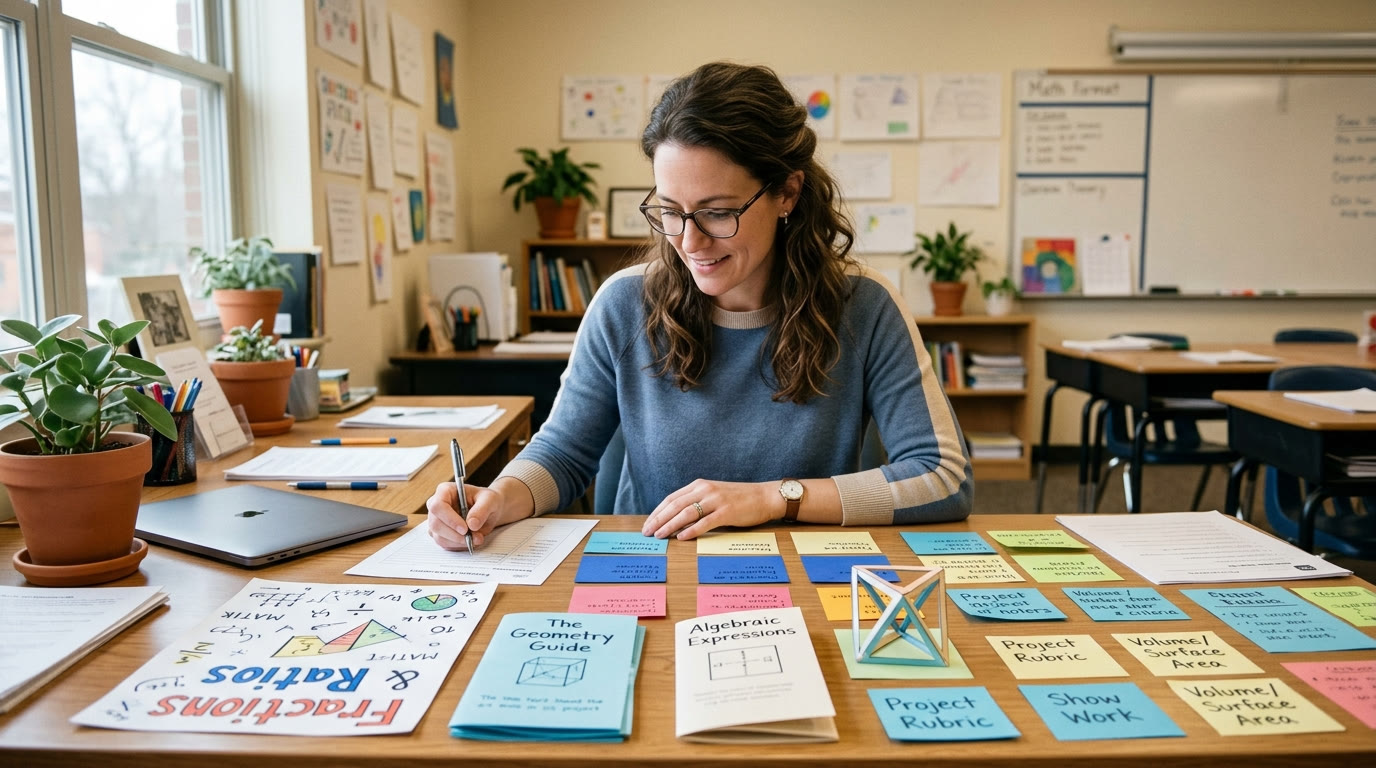
Micro-credentials are supposed to be proof you can actually do something specific in your classroom, not just proof you sat through a workshop about it, but the portfolio a lot of teachers end up submitting is basically a folder of certificates and a reflection paragraph, which is exactly the one-size-fits-all evidence micro-credentials were meant to replace.
What separates real evidence from a folder of PDFs
A district or provider reviewing a micro-credential submission isn't looking for proof you attended something, they're looking for proof you can do the specific classroom practice the credential names. That means the strongest submissions include actual classroom evidence, not just a certificate of attendance, and a reflection that's specific enough to show you actually changed something, not a paragraph that could describe any PD session you've ever sat through.
What to actually put in the portfolio
- A specific artifact from your own classroom, not a template. A real lesson plan you taught, real student work (names removed), an actual observation note tied to the exact practice the credential covers. Generic templates prove you can fill in a form, not that you can teach the thing.
- A before-and-after, if the credential covers a change in practice. If the credential is about questioning technique, a transcript excerpt or timing data from before and after is more convincing than a paragraph claiming your questioning "improved."
- A short reflection tied to the specific evidence, not a general one. "I noticed my wait time was 1.5 seconds before this credential and is now closer to 5, based on the two recordings above" beats "I learned a lot about questioning" every time.
- One piece of evidence you didn't cherry-pick. Reviewers can tell when every artifact is the best possible version. Including one honest example of the practice still being worked on is more credible than a portfolio that looks flawless.
A workflow that doesn't eat a whole weekend
- Collect evidence as you go, not the week the credential is due. A phone photo of a student work sample or a two-line note after a lesson takes thirty seconds in the moment and saves hours of trying to reconstruct evidence later.
- Tag evidence to the credential's specific competencies as you save it, so assembling the actual submission is sorting, not searching.
- Write the reflection last, after the evidence is chosen, so it responds to what you actually have instead of describing what you wish you'd collected.
A quick before/after
Before: a folder of workshop certificates and a general reflection paragraph, assembled the night before the deadline.
After: two or three specific classroom artifacts tied directly to the credential's competencies, a reflection that references the actual evidence, collected in small pieces along the way instead of all at once.
Where this gets easier to build
Our [professional development plan generator](/pd-plan) can help you name the specific practice you're building toward and track evidence against it as you go, rather than reconstructing a narrative after the fact, and our [training manual builder](/training-manual) is useful once you've built real expertise in something and want to turn your own evidence into a resource other teachers in your building can actually use.
The test of a portfolio worth submitting
Ask whether someone who has never met you could read the portfolio and see the specific practice, not just that a workshop happened. If the only evidence is a certificate, that's the gap worth closing before the next submission window.