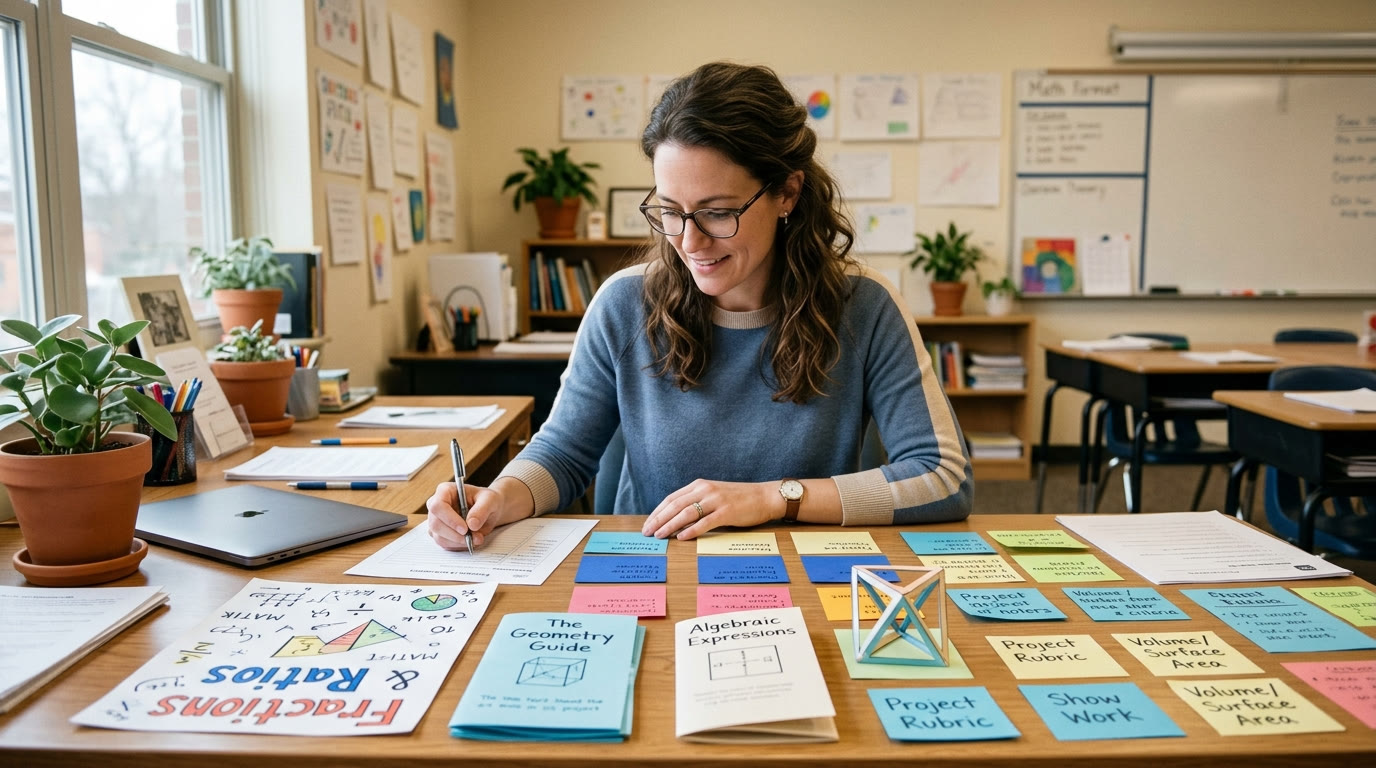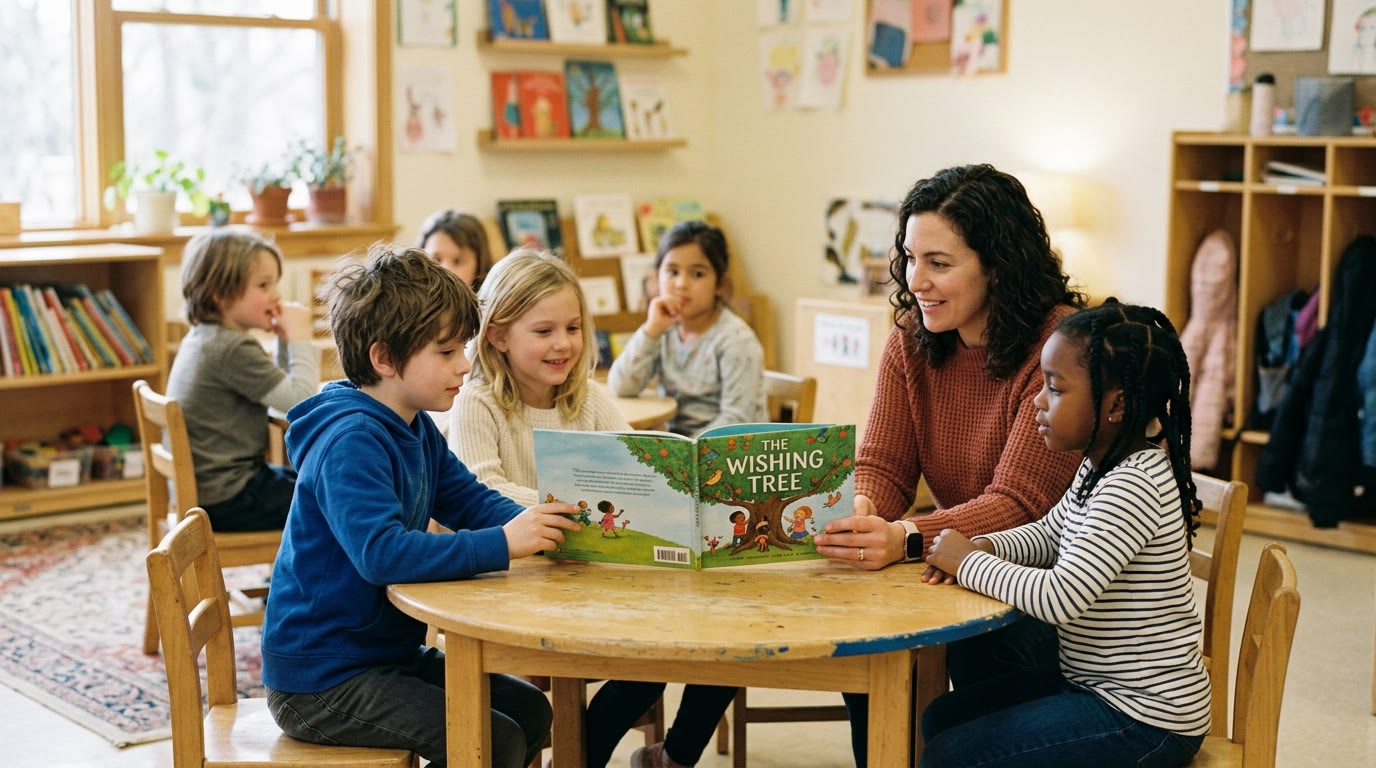
The big lesson happens at 10:30 AM. But the real management happens in the first five minutes and the last five minutes. That's where a kid drops. That's where confusion lives. That's where AI can quietly do a lot of work.
Morning check-ins
You walk in. You want to know what's happening with 28 kids. Who's struggling? Who's absent? Who's not ready? You don't have time to pull 28 individual chats before the bell.
What works: the night before, send a quick one-liner into an AI tool with the day's agenda. Ask it to generate 2-3 check-in questions that feel personal but not invasive.
"We're starting poetry today. Generate 3 morning check-in questions that help me see who's anxious about sharing work vs. excited vs. needs support."
You get something like:
- "If today's poem was a food, what would it be?"
- "Are you more nervous or excited to write today?"
- "What's one thing you want your classmates to know about your poem before you share?"
You ask these instead of "Good morning, please sit down." You learn things. Kids show up ready.
Then, during the actual work time, you're not starting from cold, you know who needs what.
Transitions
The bell rings. It's time to switch from writing to discussion. Half the class isn't done. Three kids are off-task. Two are packing their backpacks.
What works: have a transition prompt pre-written by an AI tool. Something short, something they can do in 60 seconds that signals "we're moving on now."
"Finish your last sentence. Then close your notebook and tell your partner one thing you figured out while writing."
The tool can generate variations depending on what just happened, if they were writing in silence vs. collaborative work vs. stuck on a problem. You don't have to think it up fresh every transition. You just pick one and read it.
This feels small. It's not. Smooth transitions save 10 minutes a day. That's 50 minutes a week. That's a whole instructional block.
Wrap-ups and exit tickets
3:15 PM. You need to know what actually landed today so you can plan tomorrow. You don't have time to read 28 exit tickets in depth.
What works: ask the AI tool to read your exit tickets (or their quick voice-recorded summaries) and give you the pattern. Not the grade. The pattern.
"Here are 28 exit tickets about today's lesson on photosynthesis. Summarize what students understood, what confused them, and what I should clarify tomorrow in 3 bullet points."
You get:
- Understood: most kids can define photosynthesis and name the inputs/outputs
- Confused: 7 kids mixed up the light reactions with the Calvin cycle
- Action: reteach the two stages tomorrow with a visual timeline before going deeper
Now you know what tomorrow looks like. You didn't manually sort 28 tickets.
The rule to remember
These micro-moments work because they're:
1. Predictable. Check-in, transition, wrap-up, they happen every day.
2. Low-stakes. You're not asking AI to make a grades decision. You're using it for signal, not judgment.
3. Asynchronous. You prep them the night before. They're ready when you need them.
The [classroom management tool](/classroom-management) has templates for all three, and the [discussion questions tool](/discussion-questions) helps you design the open-ended stuff that gets real answers.
The thing is: you already do these routines. You're just doing them by hand every single day. AI doesn't replace the routine. It handles the invisible grunt work so you can stay present for the actual classroom.