Every classroom library loses books. Not in one dramatic heist — a paperback goes home in a backpack in October, a graphic novel gets left in the cafeteria in December, and by April your shelf that had 200 titles has maybe 140, and you can't say which ones or when.
Most teachers respond to this by either giving up on tracking entirely (books are a gift to the room, whatever happens happens) or by building a system so heavy nobody uses it — a spreadsheet with barcodes that dies in week two. The fix is a system light enough that a seven-year-old can run it themselves, and specific enough that you actually learn something from it.
What a checkout system needs to do
It only has one job: tell you who has what, and for how long. It doesn't need due dates, fines, or a database. It needs a card, a slot, and a routine kids can run without asking you.
Ask an AI:
"I run a classroom library for [grade level]. Design a simple, kid-operated checkout system — no technology, low-prep — that tracks which student has which book and roughly how long they've had it. Include the exact setup I'd need, and a routine for how a student checks a book out and back in without me being involved."
A workable answer usually looks like this:
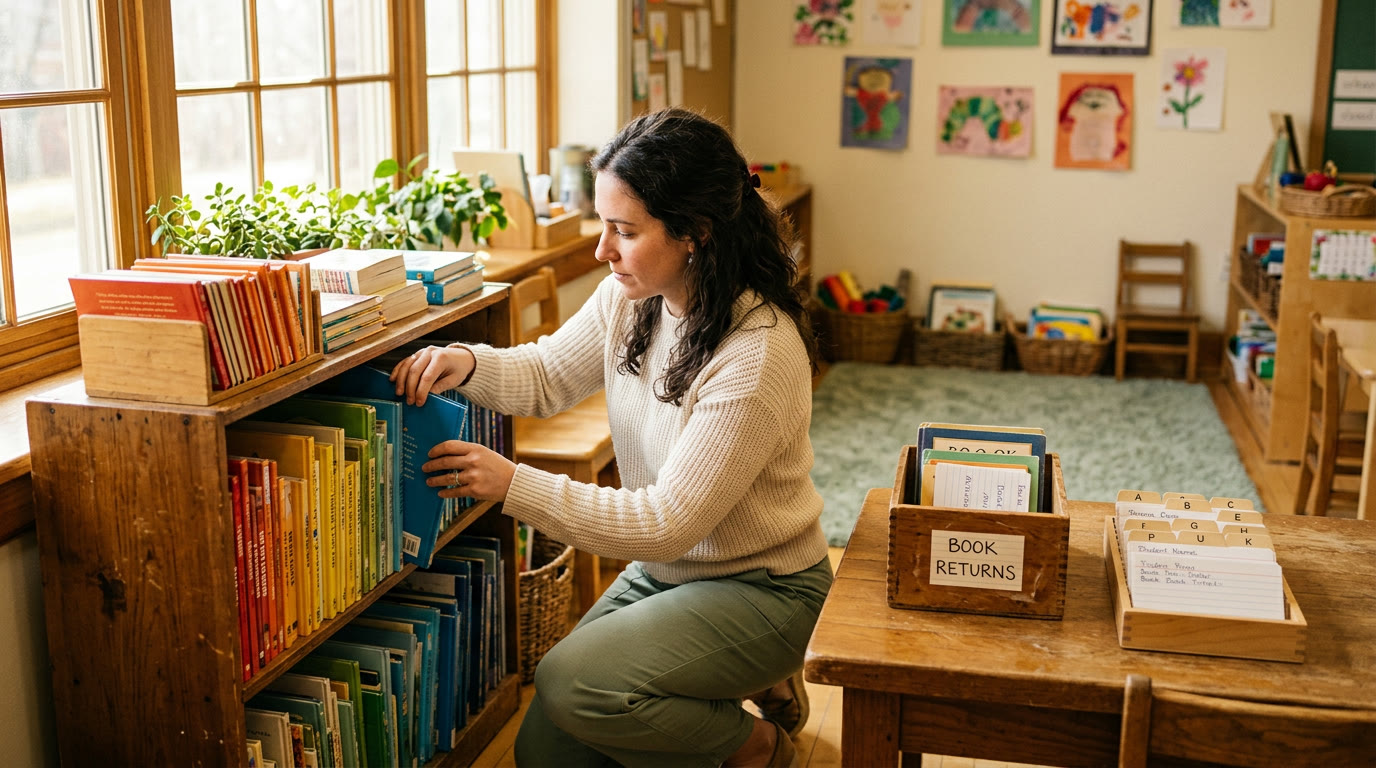
- A card in the back of each book with the title pre-printed, where a student writes their name and the date when they take it
- A simple return slot — a box or a clipboard — where the card gets pulled and clipped when the book comes back
- A weekly two-minute scan where you flip through the still-checked-out cards and notice anything that's been out more than two weeks
That weekly scan is the part most systems skip, and it's the only part that actually prevents the spring disappearance — you're catching a wandering book while it's still findable, not discovering it's gone during summer inventory.
Making it something kids actually do
A system depends entirely on whether an eight-year-old will use it without being reminded every single time. Two things make that likelier:
1. The card lives in the book, not in a separate binder. If checking a book out means walking to a different location, kids skip it.
2. You model it out loud the first two weeks. "I'm taking this book, I'm writing my name and today's date on the card, I'm putting it back in the pocket." Say it while you do it, every day, until it's automatic.
Don't build in punishment for a book coming back late in the first month. The system's job is visibility, not enforcement — you want honest data about where books actually go, and kids stop using an honest system the moment it starts costing them something.
What the data is actually for
After a month of the weekly scan, you'll notice patterns: certain genres walk off more (graphic novels, almost always), certain students borrow constantly and never return (worth a quiet, non-accusatory conversation, not a consequence), and certain shelves get raided while others sit untouched. That tells you what to restock and what to weed, instead of guessing at the book fair every fall.
Where our tools fit
If you're setting this up alongside other start-of-year routines, our [classroom management](/classroom-management) tool can build the full routine — checkout system included — as one coherent plan instead of a patchwork of separate systems. And if you're training a volunteer or aide to help run the library corner, our [training manual](/training-manual) tool turns the routine into a one-page reference they can follow without you standing over their shoulder.
What still needs your judgment
No checkout system, however light, replaces you actually knowing your library. The kid who keeps three books at a time because reading is the one thing going right for them right now isn't a compliance problem — read the pattern before you read the numbers.