A classroom library dies one of two ways: nobody checks books out because the system's too much friction, or everybody checks books out and half of them never come back. The fix isn't a fancier system — it's a lighter one that students can run themselves, with just enough tracking that you can actually find a missing book before it's gone for good.
Match the system to your actual traffic
A library with 40 books and light daily traffic needs something completely different than one with 300 books and every kid swapping titles twice a week. Don't copy a Pinterest system built for someone else's volume.
- Low traffic, few titles. A simple sign-out clipboard by the shelf — name, title, date — is enough. No barcode needed.
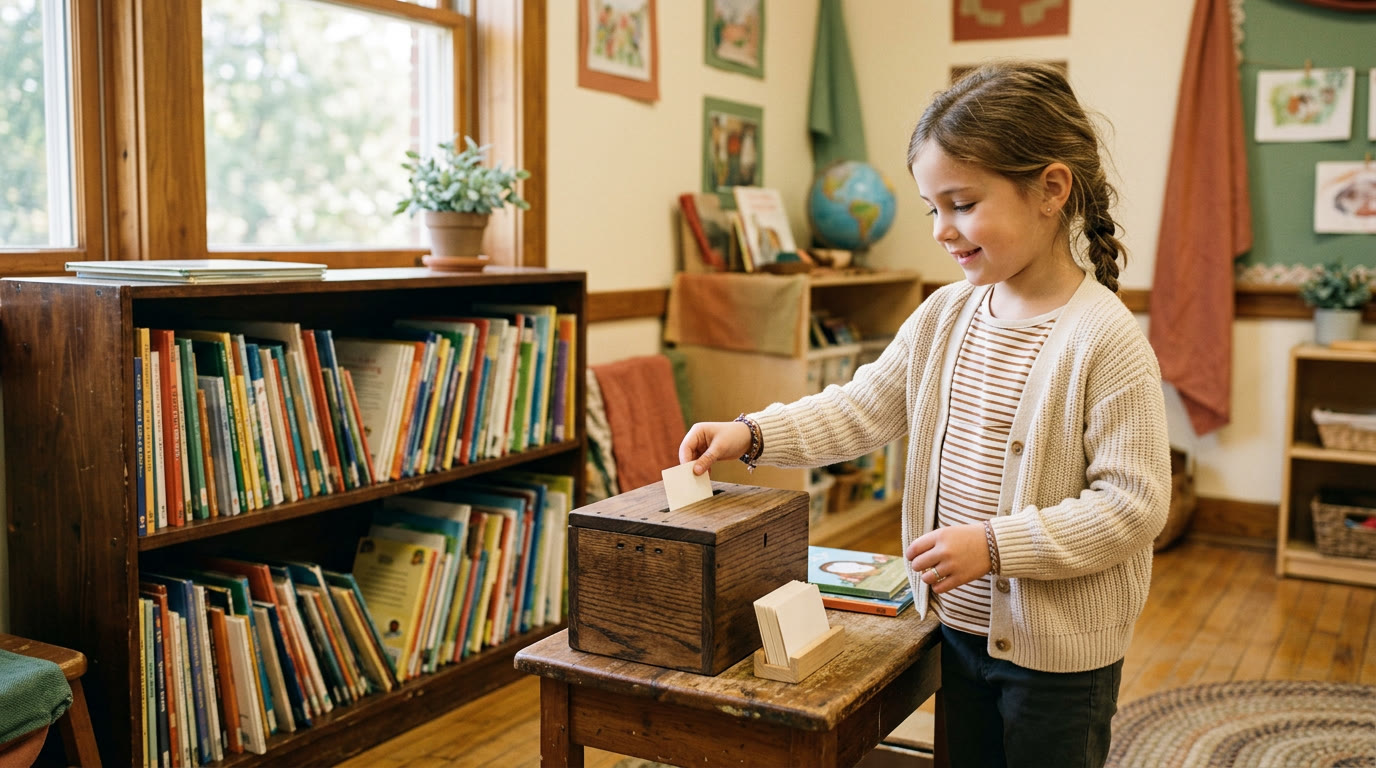
- Medium traffic. A pocket-and-card system: each book has a library pocket with a card; students drop their card in a labeled bin when they take a book, keep the card in their own book bin when they're done.
- High traffic, big collection. Worth the setup time on a spreadsheet or free app with book titles pre-loaded, where students scan or type a short code instead of writing full titles.
Pick the tier that matches your real numbers, not the one that looks most organized on a shelf photo.
Build the tracking sheet once, not every week
Whichever tier you land on, the setup — a book list with short IDs, a check-in/check-out log template, a "these are overdue" flag — is a one-time build that then runs itself for months. That setup is exactly the kind of structured, repetitive task AI is fast at.
Try this:
- "I have a classroom library with these titles: [paste list]. Assign each a 3-character checkout code and generate a printable card template with title, code, and a blank for the student's name and date."
- "Build a simple checkout log template — student name, code, checkout date, due date (2 weeks out), return date — I can print or put in a spreadsheet."
You still print, laminate, and set up the physical bins yourself, but the naming and template work that usually eats an evening is done in minutes.
Teach the routine, don't just post the rules
A checkout system fails when students don't know the two-step motion: take a book, do the checkout action, no exceptions. Practice it explicitly the first week like any other classroom routine — model it, have three kids do it in front of the class, then let the room run it independently. A sign on the shelf that nobody reads isn't a system; a thirty-second habit every student can do without asking is.
Our [classroom management plan tool](/classroom-management) can build the full routine-teaching script for a new system like this — what to model on day one, what to check on day three, and what a smooth version looks like by week three.
Run a light monthly reset
Once a month, spend five minutes checking the log against what's actually on the shelf. Books flagged as checked out for over three weeks are the ones to chase — a quick "hey, do you still have [title]?" note home usually surfaces it. Skip the guilt trip; most missing books are just forgotten in a backpack, not lost on purpose.
What still needs your judgment
- The right tier for your room. A high-effort system for a small collection wastes time you don't have; a too-light system for a big, high-traffic library loses books you can't afford to replace.
- When to simplify. If students are avoiding the library because checkout feels like a chore, the system is too heavy — cut a step before adding a rule.
- Which books to retire the tracking on. Beat-up paperbacks and duplicates aren't worth chasing down; save your follow-up energy for titles that are actually hard to replace.