The observation most teachers get feedback from - the formal, administrator-led one - is built to answer a specific question: does this teacher meet the standard for evaluation. That's a legitimate question, but it's not the same question as "what's one thing this teacher could adjust to get better right now," and treating the two as interchangeable is why so many teachers report that formal observations rarely change what they actually do in the room the next day.
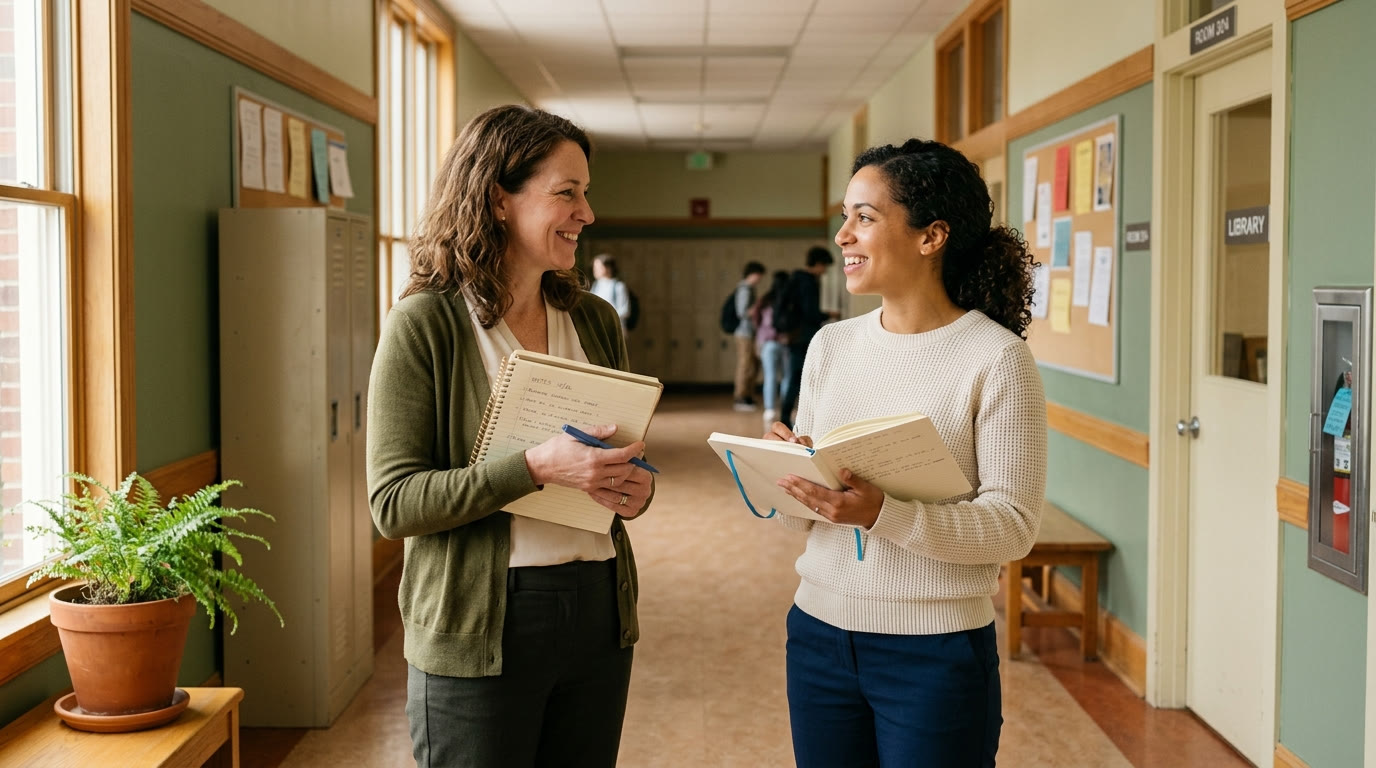
A peer observation exchange - two teachers watching each other and trading specific, low-stakes feedback - is built for the second question instead. It works, but only if it's set up deliberately. Left informal, it either doesn't happen or produces vague, unhelpfully polite feedback that nobody acts on.
Pick a narrow lens before you walk in
The single biggest failure mode for peer observation is trying to watch everything at once and ending up with generic feedback ("good energy, engaged students!") that doesn't tell the observed teacher anything they didn't already know. Fix this by agreeing on one specific lens before the observation, chosen by the teacher being observed:
- "Watch specifically how I handle the transition between whole-group and independent work - I think I'm losing 3-4 minutes there and I can't tell why."
- "Watch who I'm calling on. I have a hunch it's the same six hands every time."
A narrow lens turns a vague 45-minute impression into a specific, actionable data point.
Structure the feedback conversation, don't wing it
Even good observers give worse feedback than they're capable of when the follow-up conversation has no structure - it tends to drift toward either empty praise or unfocused critique. A simple three-part structure fixes this:
1. What I saw - purely descriptive, no judgment yet. "You called on six different students by name in the first ten minutes, four of them in the front two rows."
2. What I noticed about the lens we agreed on - tied specifically to the question asked, not a general impression.
3. One thing worth trying - a single, concrete, testable adjustment, not a list of five.
Keeping it to one suggestion instead of everything the observer noticed is what actually gets tried the following week, rather than filed away as a longer list nobody has time to act on.
Use AI to prep the observer's noticing, not to replace it
AI can't watch your classroom, but it's genuinely useful for helping an observer sharpen what to look for before they walk in, especially on a lens they haven't practiced observing before.
- "I'm observing a colleague who wants feedback specifically on classroom transition time. What are 3-4 concrete, observable things I should time or count during the observation, rather than general impressions?"
That kind of prep turns a well-meaning but untrained observer into someone who comes back with actual data - a transition time in minutes, a tally of who got called on - instead of a vague sense of how the lesson felt.
Make it reciprocal and recurring, not a one-off favor
A single observation exchange is a nice gesture. A recurring one - once a month, alternating who's observed - is what actually changes teaching, because it turns "getting feedback" from a rare, slightly anxious event into a normal part of the job. Pair with someone whose classroom management or content area is different enough from yours that they'll notice things you've stopped seeing in your own room.
Where our tool fits
Our [PD plan generator](/pd-plan) can help you build the recurring structure - who's observing whom, on what cadence, and around which growth goal - so the exchange survives past the first enthusiastic month instead of quietly stopping once the school year gets busy.
The feedback that actually changes your teaching rarely comes from the observation with the highest stakes. It usually comes from the one where someone you trust watched for exactly one thing and told you the truth about it.