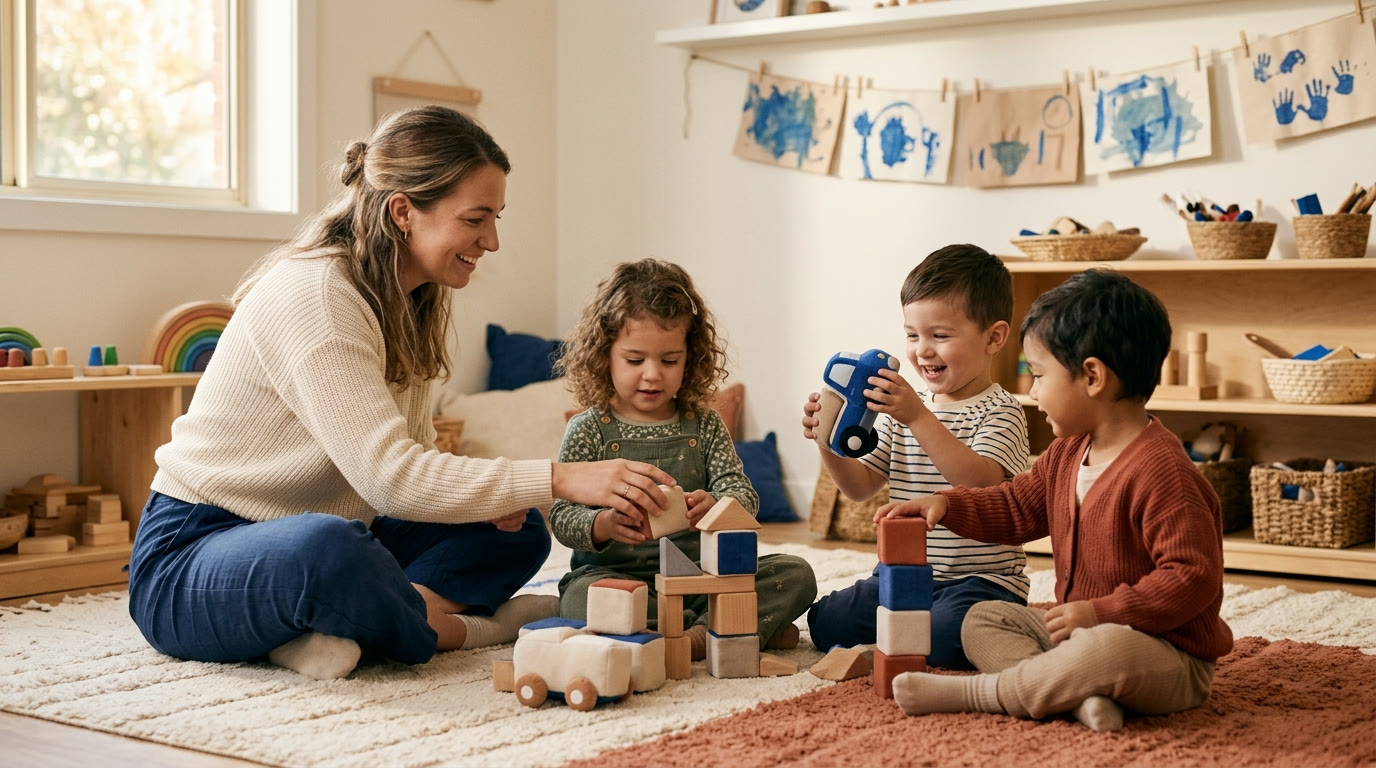
Ask five preschool teachers what a good day looks like and you'll get five different rhythms, but they're all solving the same tension: too much unstructured free play and the day drifts, nobody's building anything, and transitions turn into chaos. Too much structured lesson time and you've got four-year-olds losing it by 10am because their whole day has been sit-and-listen. The good rhythm lives in the middle, and it's built, not improvised each morning.
Why "just wing it" stops working around week three
The first couple weeks of a preschool year, routine matters less because everyone's still figuring each other out. By week three, kids have started to expect a shape to the day, and when that shape isn't consistent, meltdowns during transitions go up, not because the activities were wrong, but because nobody could predict what came next.
What an actual daily rhythm needs
1. A predictable order of blocks, even if the content inside each block changes daily. Arrival, circle, centers, outdoor, story, dismissal, in whatever order works for your room, but the *order* stays the same so kids can anticipate the next thing without being told every time.
2. At least one high-energy block and one low-energy block on either side of any seated learning time. Circle time right after outdoor play, when kids have already burned off morning energy, goes very differently than circle time cold at 8:15am.
3. Centers that rotate focus, not just toys. A block corner, a sensory bin, and a listening station cover different developmental skills in the same 30-minute window, so "center time" isn't just free play with extra steps, it's differentiated by what each spot is actually building.
4. Built-in observation windows, not just supervision. A few minutes where you're specifically watching one or two kids at a chosen center, rather than generally circulating, is how you catch developmental notes worth writing down instead of losing them in the noise of the day.
The meals-and-transitions problem nobody plans for
The academic-sounding parts of a preschool day, circle, centers, story, get all the planning attention, but snack, meals, and transitions eat more real time than any single "lesson" block, and a rough transition can undo twenty minutes of a calm activity in ninety seconds. Building a consistent transition signal, a song, a specific phrase, the lights dimming, and rehearsing it the same way every single day matters more here than in almost any other grade band.
Our [preschool daily plan generator](/preschool-daily) builds this full rhythm in one pass, age group, group size, and focus in, and gets back a day structure with the block order, center rotation, outdoor and meal timing, and observation notes already balanced against each other, instead of you assembling the shape from scratch every planning period.
What still needs your judgment
- Reading the room on any given day. A rhythm is a default, not a rule, a rainy day or a rough morning might mean swapping outdoor time for extra sensory play, and that's the right call, not a failure to follow the plan.
- Individual stamina differences. Some kids in your room can sit through a ten-minute story, others max out at four, build in an easy early-exit option for the ones who need it rather than forcing the full block.
- What the observation notes actually mean. The rhythm gets you the time to watch, but interpreting what you saw, developmentally on track, needs more support, ready for a challenge, still takes your own judgment, not a template.