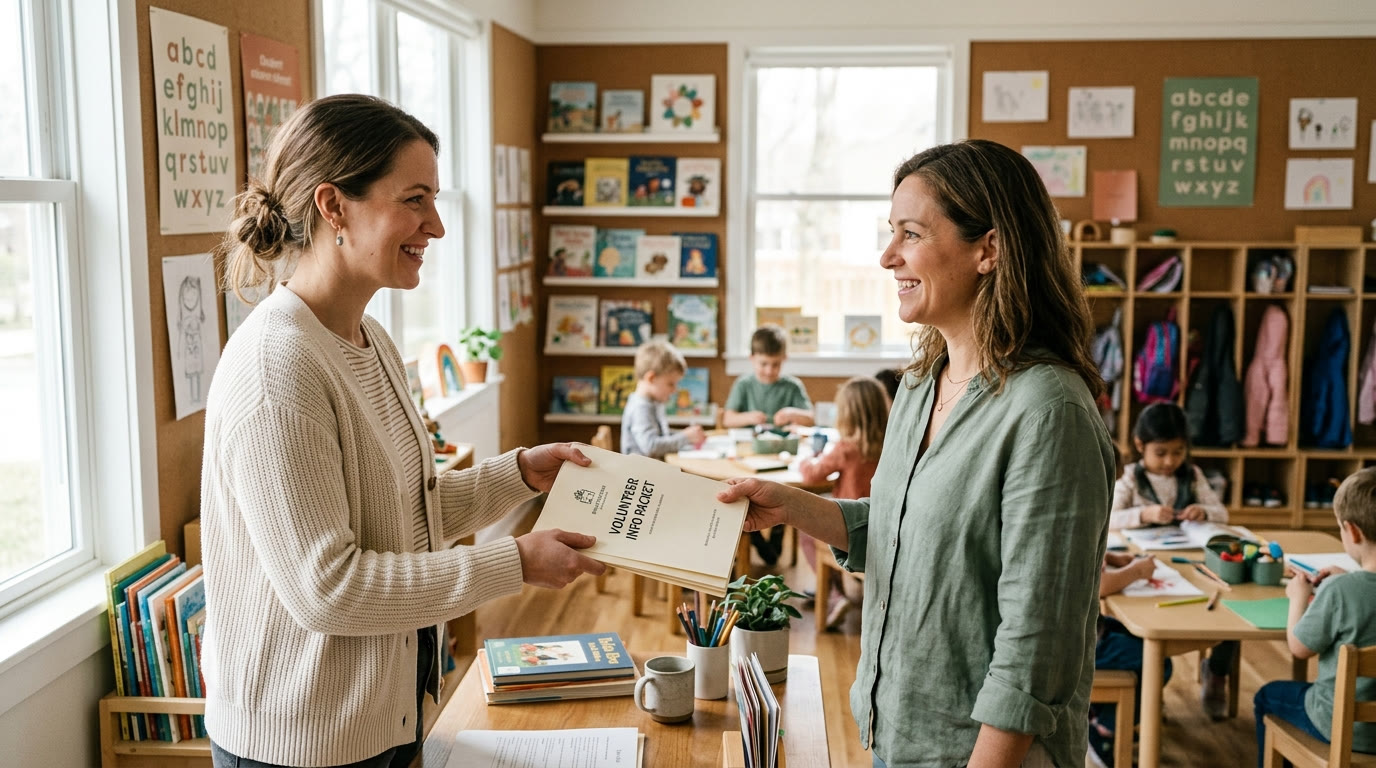
Every year you get a new batch of classroom volunteers - room parents running a station, a retired teacher helping with reading groups, a grandparent who shows up every Tuesday. And every year you spend the first two weeks of their time re-explaining the same things you explained to last year's volunteers: where the extra pencils live, how the reading log actually gets checked off, what to do if a kid says they need to see the nurse.
That re-explaining is the cost of never having written it down. A one-time manual pays that cost exactly once.
Why the "I'll just tell them" approach keeps failing
Verbal onboarding feels faster in the moment, but it doesn't survive turnover. A volunteer who was told something in October forgets half of it by January, and if that volunteer doesn't return next year, the next one starts from zero again. You end up re-teaching the same five things, to different people, every single year, because nothing outlasts the conversation it was said in.
What actually needs to be in it
A useful volunteer manual is short enough that someone will actually read it, and specific enough that it answers the question before they have to interrupt you to ask. That means:
- The physical logistics. Where supplies live, how to sign in, where to park, which door to use.
- The exact task, step by step. Not "help with the reading station" but "call each pair up in this order, hand them the card from the blue folder, time them for four minutes, mark the sheet when they finish."
- The redirect script. What to say to a student who's off task, in your words, not a generic classroom management phrase that doesn't match how you actually run your room.
- The emergency and just-in-case list. Who to get if a kid is sick, upset, or the fire alarm goes off while you're mid-station.
- What not to do. Don't grade anything, don't discuss another student's performance with a parent, don't give out personal contact information - the boundaries volunteers won't know unless you say them.
Use AI to draft the structure, then fill in what only you know
The organizing work - turning a list of tasks into a clean, step-by-step manual with the right sections in the right order - is exactly what a model is fast at. The specific classroom details are still yours to add.
Try this:
- "I need a volunteer training manual for a parent running a reading rotation station in my 3rd grade classroom. Sections: welcome, physical logistics, the station task step by step, a redirect script, and an emergency contacts placeholder. Keep the tone warm but clear, like you're talking to someone who's never done this before."
- Fill in your actual room number, your actual redirect language, your actual emergency contact names. The draft gives you the shape; you supply the substance that makes it usable in your specific room.
Make it reusable, not disposable
Save it somewhere that survives past this one volunteer and this one year - a shared drive folder, not a printout that gets recycled in June. Update it once a year in a five-minute pass rather than rewriting it from memory every fall. That's the whole point: write it once, hand it to whoever shows up next, and spend your actual time with volunteers building the relationship instead of repeating the logistics.
Where our tool fits
Our [training manual builder](/training-manual) turns a list of tasks and role details into a structured, print-ready manual with the sections above already in place, so you're editing your specific routines into a template instead of building the document structure from scratch every time a new volunteer starts.
A manual you wrote once in September and handed to five different people over three years has already paid for the hour it took to write.