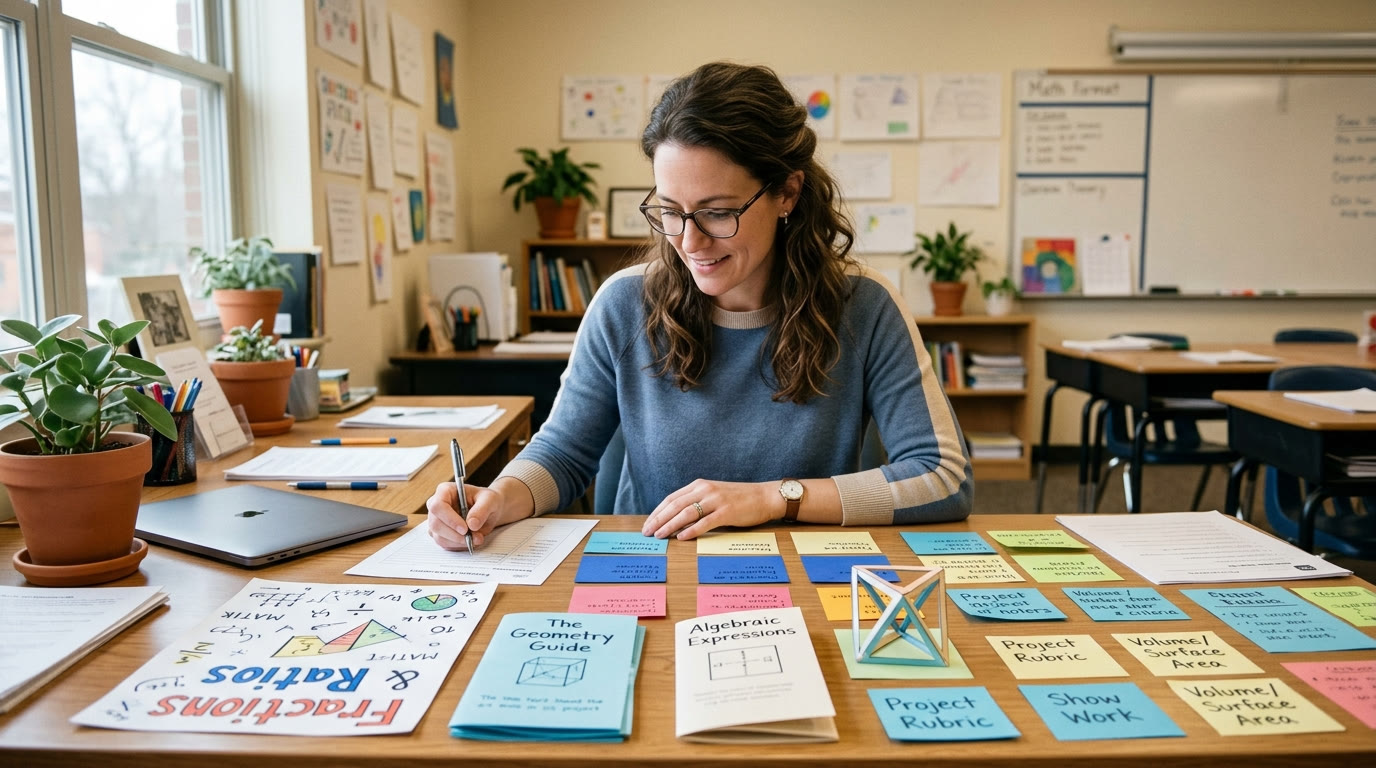
A parent once told me they were hesitant to use AI for their Christian homeschool because they worried a model would 'remove the faith part.' I understood the worry, but the real story is almost the opposite. AI is best at handling the busywork (lesson scheduling, worksheet generation, answer-key checking) so you have more time for the part that actually builds faith: reading Scripture together, discussing the theology, modeling what it means to think like a Christian in your daily work.
What AI is actually good at in a faith-based homeschool
- Scheduling the curriculum without losing your mind. You've picked a Christian curriculum (Abeka, Grapevine, My Father's World, or your own mix). AI can build the week-by-week scope and sequence so you're not staring at four subjects and a planner trying to figure out pacing. Your curriculum choices drive the model; the model just organizes the time.
- Generating review questions and activities that reinforce what your children read. You assign the Bible passage and the textbook reading; AI drafts discussion questions, memory verse aids, character-study worksheets. You review it, swap out anything that doesn't fit your teaching, and keep the stuff that works.
- Managing the logistics of multiple children at multiple levels. Adapting one lesson for a 3rd grader, a 6th grader, and a 9th grader is real work. AI can draft the tiered versions; you decide whether the adaptations preserve the content integrity.
- Checking work on subjects you're less confident teaching. A parent teaching high school algebra or literature often needs a sounding board. AI can generate answer keys and model solutions; you still do the grading and the teaching.
What AI absolutely cannot do
- Choose which books and resources to use. If you want your children reading Christian literature, classic Christian authors, and biblically sound science, you're the one picking those materials. AI suggests based on what's popular or available, not based on your faith commitments.
- Teach the faith itself. That's your job as a parent. AI can prompt discussion questions, but you're the one who actually answers "why does God allow suffering" or "what does it mean to love your neighbor" with something true and specific to your family's belief.
- Integrate your values into subjects where it matters. A math curriculum is a math curriculum. But history, literature, science, and social studies all touch on worldview questions. You're the one deciding how your Christian faith shows up in those conversations.
A workflow that keeps your values centered
1. Choose your materials first. Which Bible translation, which curriculum for each subject, which supplemental books. This is the decision that actually shapes the year; AI fills in the gaps, doesn't create the framework.
2. Use AI for the pacing and scheduling. "I'm using Abeka 3rd grade and My Father's World for science and history. Build me a weekly schedule for the year that mixes these and leaves time for Bible reading." Now you have the skeleton without the planning math.
3. Generate activities and questions, then edit them. AI drafts; you review and revise. Remove the stuff that doesn't fit your theology or your child's level. Keep what works.
4. Do the faith conversations yourself. The model can prompt "What do you think Jesus meant by...?" but you're the one answering with your own faith, your own stories, your own experience.
Where this actually frees up your time
The goal isn't to hand off teaching to AI. It's to hand off the filing, scheduling, and worksheet generation so you have more time for the conversations, the reading aloud, the watching your child understand something you taught. That's where faith-based homeschooling lives.
Our [faith-based curriculum planner](/faith-based-curriculum) builds the year-long scope and sequence from your materials and schedule, so the administrative side gets handled and you spend your energy on the actual teaching and spiritual formation that's the whole point.