Every classroom management plan I inherited as a new teacher started with a consequences ladder. Warning, name on the board, call home, office referral. Mine took me two years to figure out was backwards: the plan that actually keeps a room calm starts with routines, and the consequences ladder is the last page, not the first.
Start with what should be automatic
A routine is anything a student can do without you saying a word. If you're still narrating it in March, it's not a routine yet, it's a rule you keep repeating.
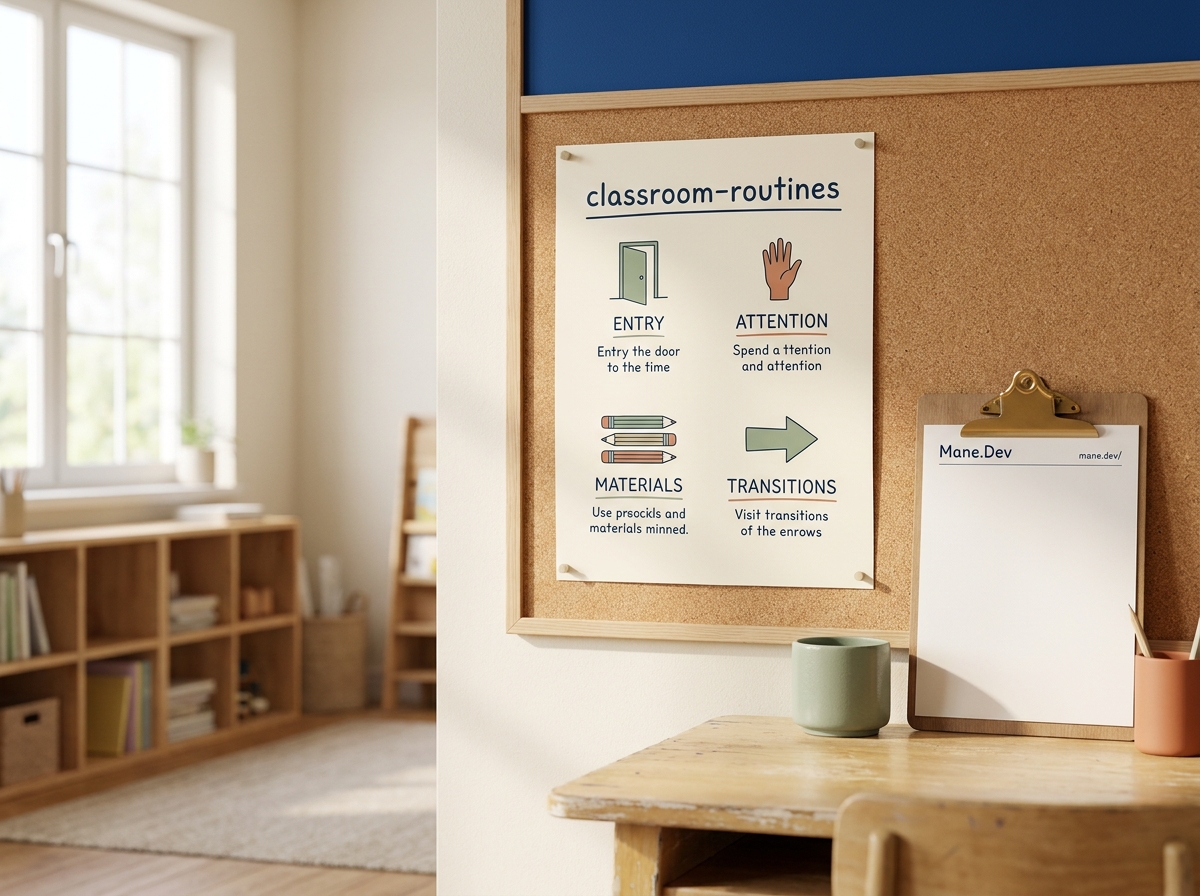
- Entry. Where do bags go, where do bodies go, what's the first five minutes on the board every single day.
- Attention signal. One consistent cue (call-and-response, raised hand, chime) that means "stop and look here," practiced until it works in under five seconds.
- Materials. Who passes out, who collects, where the extra pencils live. If this is improvised daily, you're losing two minutes of instruction time to logistics, every period.
- Transitions. The single biggest source of chaos in most rooms is the 90 seconds between activities. Name the routine, time it, praise it when it's fast.
Where AI actually helps
Ask for a routines-first draft, not a rules-first one: "I teach 5th grade, 28 students, one paraprofessional in the room during math only. Give me routines for entry, attention signal, materials distribution, and transitions between activities. For each, include what it looks like when it's working and a 2-sentence script for teaching it in week one." That's a usable, printable page, not a philosophy.
Where the model is much weaker is your specific kids. It doesn't know that Table 3 escalates when they're rushed, or that your class needs a five-second warning before any transition. You still write the "why this kid needs this specific move" layer yourself.
The consequences page, once routines exist
With routines actually running, the consequences ladder gets short, because most of what used to require a consequence was actually a routine gap. What's left:
1. A private, non-public redirect (first move, always).
2. A brief reset, not a punishment, a chance to re-enter the routine correctly.
3. A short conversation at a natural break, not mid-lesson.
4. Home contact, reserved for patterns, not single incidents.
The part you can't skip
Whatever plan you build, teach it explicitly in the first two weeks like it's content, model it, have students practice it, and revisit it after the first long weekend when it always slips a little. A plan on paper that was never taught is just a document nobody follows.
A common trap: over-correcting after a rough week
A rough week tempts you to add rules, a stricter point system, a longer consequences list, more signatures required from home. That almost always makes things worse, because it adds more for you to enforce and more for students to resist. The better move after a rough week is to go back to the routines page and ask which specific routine broke down, not which rule was missing. Nine times out of ten it's a transition or an attention-signal problem, not a discipline problem, and the fix is re-teaching thirty seconds of procedure, not adding a consequence.
Keep it to one page
If your management plan is longer than a page, nobody, including you, will actually reference it under pressure. One page: routines listed with their week-one teaching script, a short consequences ladder, and the two or three non-negotiables specific to your room. Everything else is a conversation, not a document.
Our [classroom management plan generator](/classroom-management) builds the routines-first draft above from your grade, group size, and biggest current pain point, then you layer in what only you know about your kids.