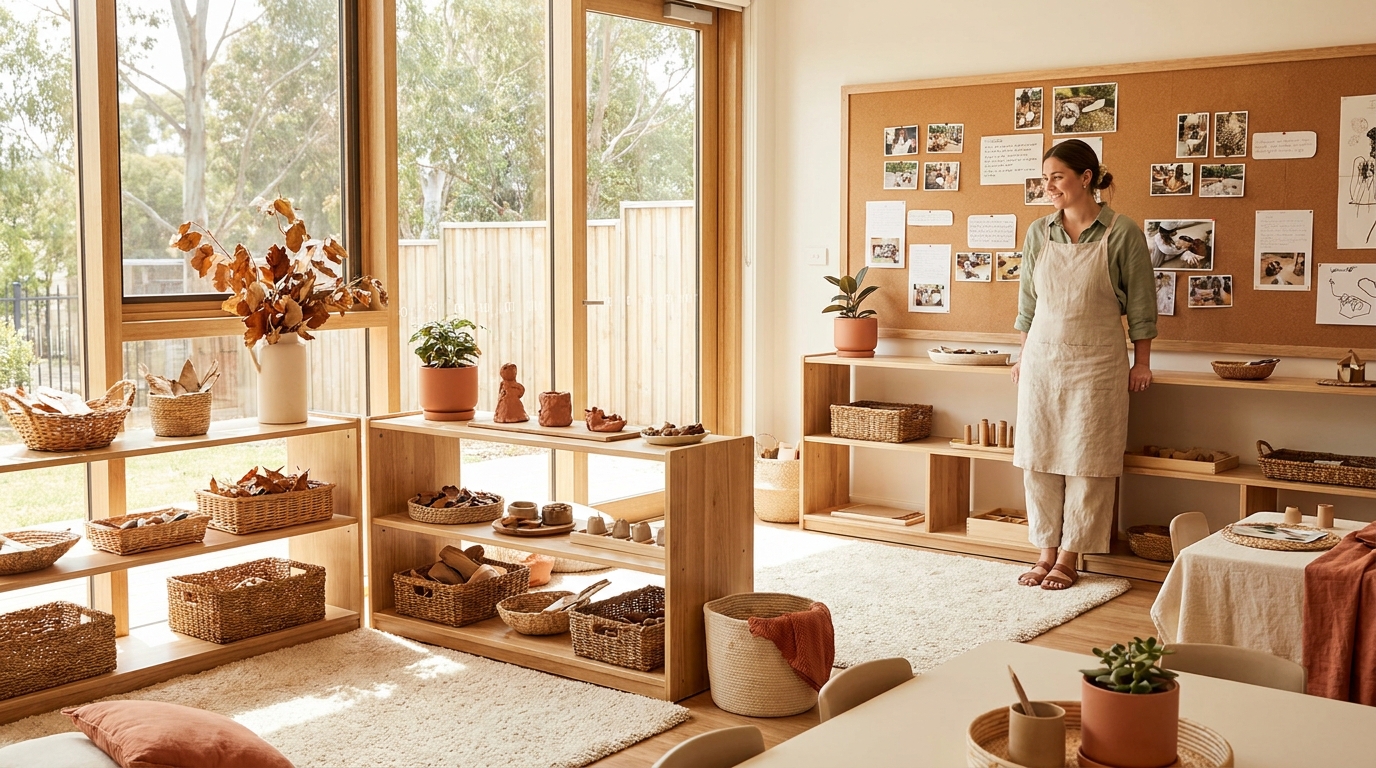
Reggio Emilia classrooms are built on careful observation and documentation. You watch what kids do, you photograph it, you take notes on what they're thinking, and you create a record that shows parents and the kids themselves where the learning came from. It's beautiful. It's also time-consuming, which is why some teachers, overwhelmed by the record-keeping part, quietly move away from the observation part, even though observation is the actual foundation of Reggio learning.
Why documentation shouldn't crowd out observation
The irony of a Reggio classroom is that the more time you spend transcribing notes, organizing photos, and writing learning stories, the less time you have to actually watch the kids work. Documentation is the tool, not the point. The point is what you saw that made you grab the camera in the first place.
What AI can handle, and what it can't
AI is genuinely useful for:
- Transcribing your spoken notes and observations into text fast, so you can dictate while you're still watching the child, not later.
- Drafting the narrative arc of a learning story from your raw observations, so you're not staring at a blank page later trying to reconstruct what happened.
- Organizing and tagging photos by date and child so you can find the documentation you need when writing a story or parent update, not spending thirty minutes in your photo library.
- Generating discussion questions and reflection prompts for a parent share-out based on the children's actual quotes and actions you've documented.
AI cannot do:
- The observation itself. An algorithm can't tell you what a child was thinking when they added water to the sand, only you can see that moment.
- The decision about which moments matter. Which photo captures the real learning? Which transcript line was the thinking-out-loud breakthrough? Those calls are yours alone.
- The relationship part of documentation. A parent reading a story about their child matters because you wrote it, looking at their specific kid, not because a model generated it from photos and notes.
A workflow that keeps both
1. Observation first. When you see something interesting, pause. Photograph it, record a voice note of what you heard, note the child's name and what they were trying to do. This takes one minute, not ten.
2. Batch the transcription. At the end of a day or every couple of days, dump your voice notes into a model: "Transcribe these observations and organize them by child. For each, include what I said they were doing, the child's own words if I recorded them, and a note on what skill or thinking showed up." You get a readable document in minutes.
3. Write the story once you have the transcript. Use a draft prompt: "From these observations of [child], write a brief learning story showing what they were investigating and what they figured out. Use their actual quotes, not paraphrased versions." Edit for voice so it sounds like you, not a template.
4. Share the raw documentation, not just the story. Parents want to see the photos and hear the quotes, not just the narrative. The story frames the learning; the photos and child's own words are the proof.
What actually changes when you use this workflow
The difference is that the documentation work gets faster, so the observation doesn't get squeezed. You're not choosing between "have beautiful documentation" and "have time to really watch the kids," because the documentation system got out of your way.
Our [Reggio project generator](/reggio-project) takes your observation notes and creates the learning story framework with discussion questions ready for a parent meeting. The tool does the organizing and drafting work; you keep the observation and the relationship work, which is where a Reggio classroom lives.