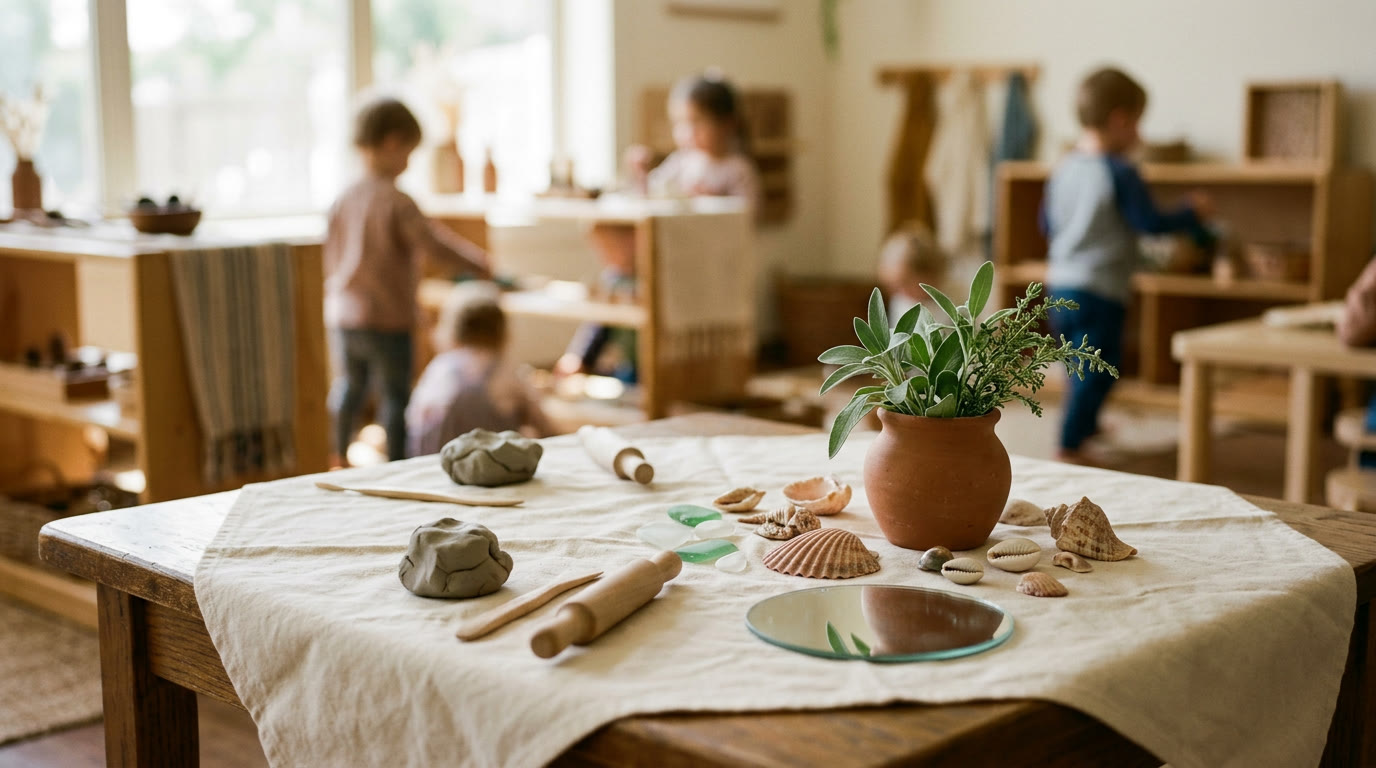
You set out mirrors, clay, and a bowl of shells because you hoped kids would explore reflection and texture. By day two they've built a "restaurant" and are taking orders on sticky notes. The old panic says the provocation failed. The better read: it worked. They took ownership. Your job shifts from defending the original plan to noticing what learning is actually happening inside their plan.
The difference between open and abandoned
An open provocation has a clear invitation and loose enough edges that kids can pull it somewhere real. An abandoned one had no thinking underneath — just pretty materials — so when kids wander, you have nothing to listen for.
Open doesn't mean "anything goes with no aims." It means you know two or three learning possibilities you're ready to follow, and you're willing to drop the ones that don't show up.
What to decide before you put materials out
1. The invitation in one sentence. "What happens when light hits these surfaces?" beats "exploration center." Kids feel the difference.
2. Two or three possible learning threads. Observation language, comparison, storytelling, measurement, collaboration — pick a short list so you can recognize them when they appear in unexpected costumes (like the restaurant).
3. Materials that can travel. If the only "right" use needs you hovering, it isn't a provocation. It's a demo waiting to happen.
4. A documentation habit that fits a busy room. One photo and one overheard sentence per day beats a binder you'll never fill.
When kids go off-script, follow the thread — don't yank them back
The restaurant isn't a failure of reflection study if kids are negotiating roles, writing marks that stand for orders, counting plates, or testing which "menu" drawing other kids understand. Those are literacy, social, and symbolic threads. Name them quietly in your notes. Offer one material that deepens *their* direction (order pads, a real menu from home, a scale for "ingredients") instead of dragging them back to the mirrors.
Ask AI to help you prep the launch, not to script the children's path:
"I'm setting a Reggio-style provocation about [theme/materials] for ages [X]. Give me: one clear invitation question, 3 possible learning threads I might see, materials list that kids can use without me, and 5 observation prompts I can jot during play if they take it somewhere unexpected."
Edit hard. Keep what matches your room. Cut the poetic fluff.
Our [Reggio project / provocation planner](/reggio-project) drafts the invitation, possible threads, and documentation prompts from your theme so you're not inventing the structure from scratch. Our [learning objectives tool](/learning-objectives) helps you name the threads in language your co-teacher or director will recognize when they ask what the restaurant week was "really about."
What still needs your judgment
- Safety and limits. Open isn't unsafe. You still hold the non-negotiables.
- When to close a provocation. If energy is gone, end it. Don't keep materials out out of loyalty to week-one plans.
- How much to enter the play. Sometimes your best move is a single question. Sometimes it's staying out of the way for ten more minutes.