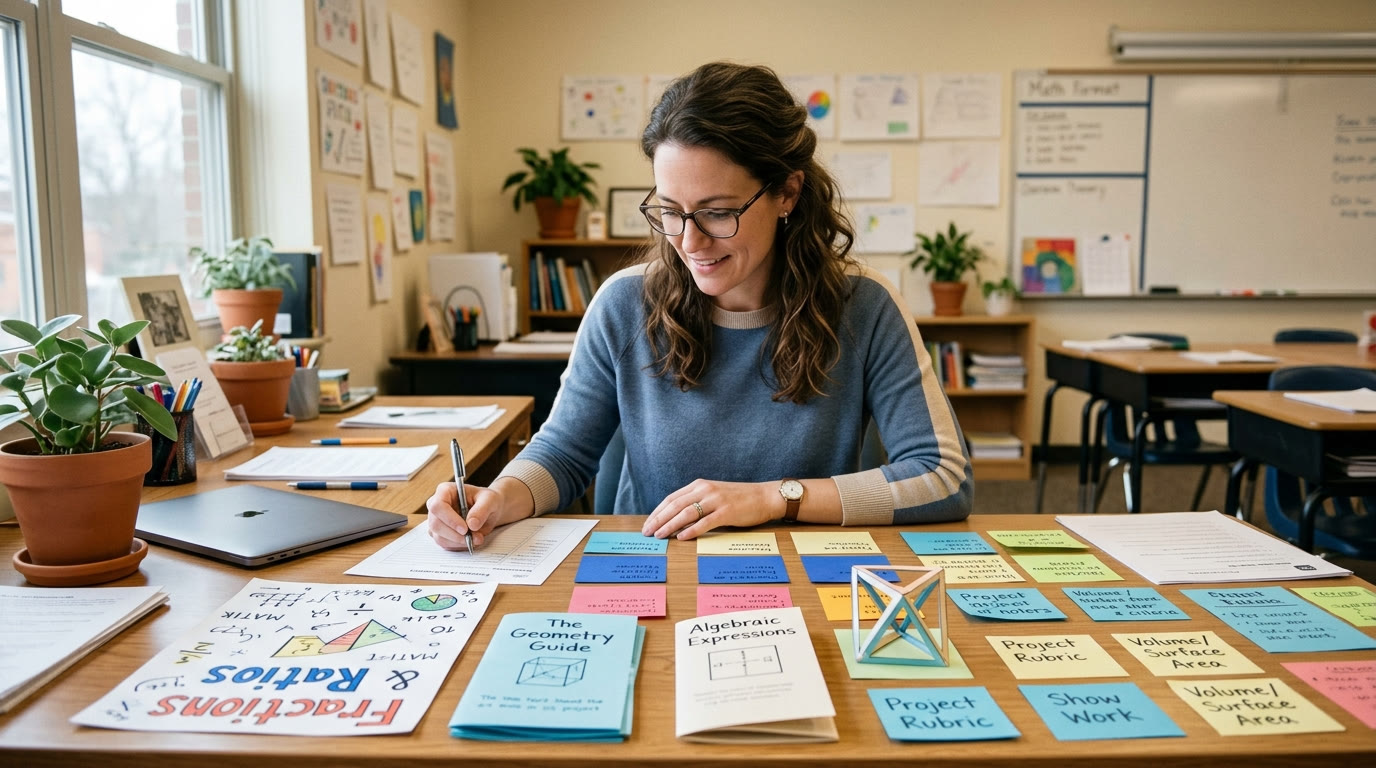
Somebody handed you the PLC lead role this year, probably because you're organized, not because anyone trained you to run a meeting. Now you have 45 minutes every other Tuesday, four or five colleagues who'd rather be grading, and a vague mandate to "collaborate on instruction."
Why PLC meetings drift
Without a tight agenda, the default is announcements first, then whatever's loudest in the room that week, and by the time anyone gets to actual instructional talk, there are eight minutes left and everyone's already half out the door. The meeting *feels* productive because people talked, but nothing changed in anyone's classroom the next day.
Building an agenda that protects the real work
A PLC agenda that works usually has four fixed slots, in this order:
1. Housekeeping (5 min, hard cap). Announcements go here and nowhere else. If it's not urgent, it goes in an email instead of eating meeting time.
2. Data or student work look (15 min). One piece of evidence, brought by one teacher on rotation, not a review of everyone's gradebook.
3. The actual instructional question (20 min). A single, specific question the team is trying to answer this cycle, not "how's it going."
4. Commit and close (5 min). Each person names one thing they'll try before the next meeting.
Where AI speeds up the prep
Building that instructional question is the part that takes the most thought, and it's also where a model helps most. Give it your standard or unit, your last round of common assessment data (even just a rough summary), and ask it to draft three or four possible focus questions for the next meeting, phrased as things a team could actually answer together, not open-ended prompts like "how can we improve engagement."
A weak focus question: "How do we get kids more engaged with reading?"
A strong one, generated from actual data: "On the last common assessment, two-thirds of students could identify the theme but couldn't cite textual evidence for it. What's one shared strategy we could all try next unit for getting kids from claim to evidence?"
The second version gives the meeting something concrete to work on and something concrete to check next time.
Keeping it a team meeting, not a training
The temptation once you have a tidy agenda is to turn the PLC into a mini-workshop where you present and everyone else listens. Resist that. The agenda structure is there to protect time for the team to actually talk, not to give you more time to talk at them. If you do want to run an actual training session, that's a different format; our [workshop slides outline tool](/workshop-slides) is built for that instead, and keeping the two separate helps your team trust that PLC time is genuinely collaborative.
If your PLC is working toward a shared professional growth goal for the year, not just this cycle's question, our [PD plan generator](/pd-plan) can help frame that longer arc, so individual commitments from each meeting are visibly building toward something instead of resetting every two weeks.
What changes after a few cycles
The first two or three meetings with this structure will feel stiff, because you're now enforcing time caps on a group used to letting announcements run long. Stick with it. By the fourth or fifth meeting, the team stops needing you to redirect the conversation, because the agenda itself is doing that work.