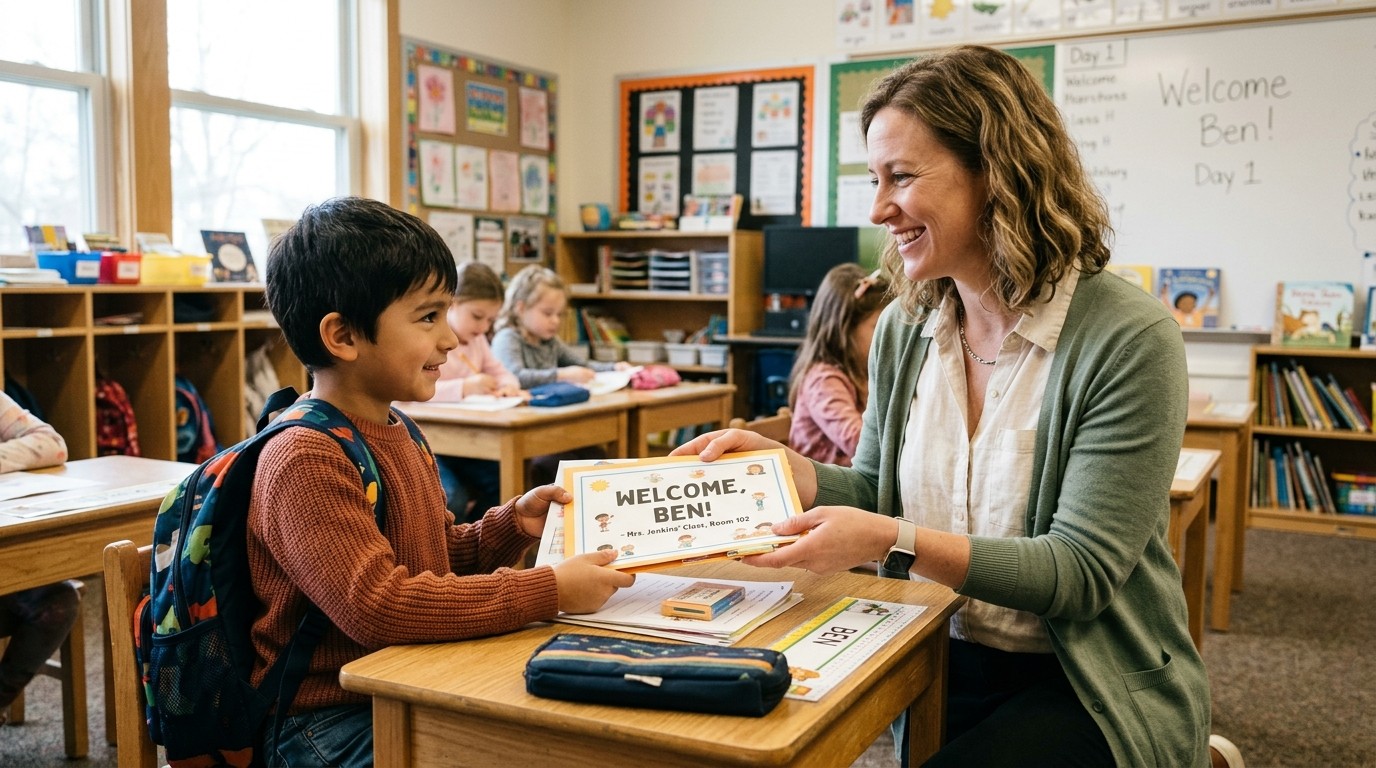
A new student arrives mid-year with almost no notice, sometimes literally that morning. Everyone else in the room already knows the routines, the seating norms, where the pencil sharpener is, and who they sit with at lunch. The new student knows none of it, and the first few days set the tone for whether they feel like they belong here or like they're perpetually catching up.
The mid-year problem is different from the first week of school
At the start of the year, everyone is new together, so nobody has to individually explain the routines, they're being built in real time for the whole class. A student who arrives in November walks into a room where all of that is already invisible to everyone else because it's second nature. You have to reconstruct it for one person without pausing the class for everyone else.
What actually needs to happen in the first 48 hours
1. A one-page routine sheet, not a verbal walkthrough, bell schedule, where materials live, bathroom and hall pass procedure, how homework gets turned in; a new student forgets 80% of what you tell them verbally on day one, but they can reread a page
2. A peer buddy assigned before the student walks in, not found on the spot, pick someone steady and kind ahead of time so the new student has one known face instead of scanning the room for who might be friendly
3. One low-stakes task in the first class period, something they can complete and turn in successfully on day one, so their first data point about this classroom is "I could do this," not "I was behind before I even started"
Getting the paperwork and the welcome to happen together
Our [student onboarding tool](/student-onboarding) builds the routine sheet and the peer-buddy briefing in a single pass from your class's actual schedule and norms, instead of you writing both from scratch during your one prep period that day. Once the student is settled, our [parent communication tool](/parent-communication) is a fast way to send a genuine first-week note home, one that reads like it's about their specific kid, not a template every new family gets.
Where the real risk is
- Academic gaps are usually visible fast and get addressed. Social isolation is quieter and takes longer to notice, check in with the peer buddy after a few days, not just the student directly
- Don't wait for a formal records transfer to start basic accommodations you already know about from the parent or the front office; start with what you have and adjust once records arrive
- The first assignment grade this student gets in your class will shape how hard they try on the second one, make sure the first one is winnable
By the end of the first week, the goal isn't full mastery of every class routine. It's that the student stops needing to ask "what do I do now" every fifteen minutes, and that took three days of intentional structure, not three days of them figuring it out alone.