Most peer feedback in classrooms sounds like either nothing ("Good job!") or meanness ("This is confusing"). AI can help you generate the middle path: specific, kind, and useful.
What peer feedback is supposed to do
The whole point is that your student gets real reader response from someone other than you. Not a grade. Not a judgment. Just: what landed and what didn't. The feedback is good when the writer can read it and know exactly what to do differently.
Bad peer feedback: "This is confusing."
Better: "I didn't understand why you chose a Venn diagram for comparing these two cell types, wouldn't a two-column table make the differences clearer?"
That's the move. It's specific, it's curious (not harsh), and it gives the writer something to change.
The template trap
You can't just hand students a rubric and tell them to feedback. They'll either inflate every score or copy the same comment six times. What works is giving them *sentence frames* and *examples* of what real feedback sounds like.
This is where AI saves time. You write one strong example of feedback, paste it along with the assignment, and ask the model to generate 4 more variations on the same assignment. Then you pick the strongest one or two and show them to your class as models.
Try this:
- "Here's one strong peer feedback comment: [paste example]. Now generate 4 more peer feedback comments on the same work, same tone, same specificity, all different observations."
- You'll get usable stuff. Cut the generic ones, keep the ones that show a real reader reaction.
The role of the rubric
The rubric is the foundation, but it's not the feedback itself. A rubric tells you what to look for. The feedback tells the writer what you found and what it means.
With AI, you can:
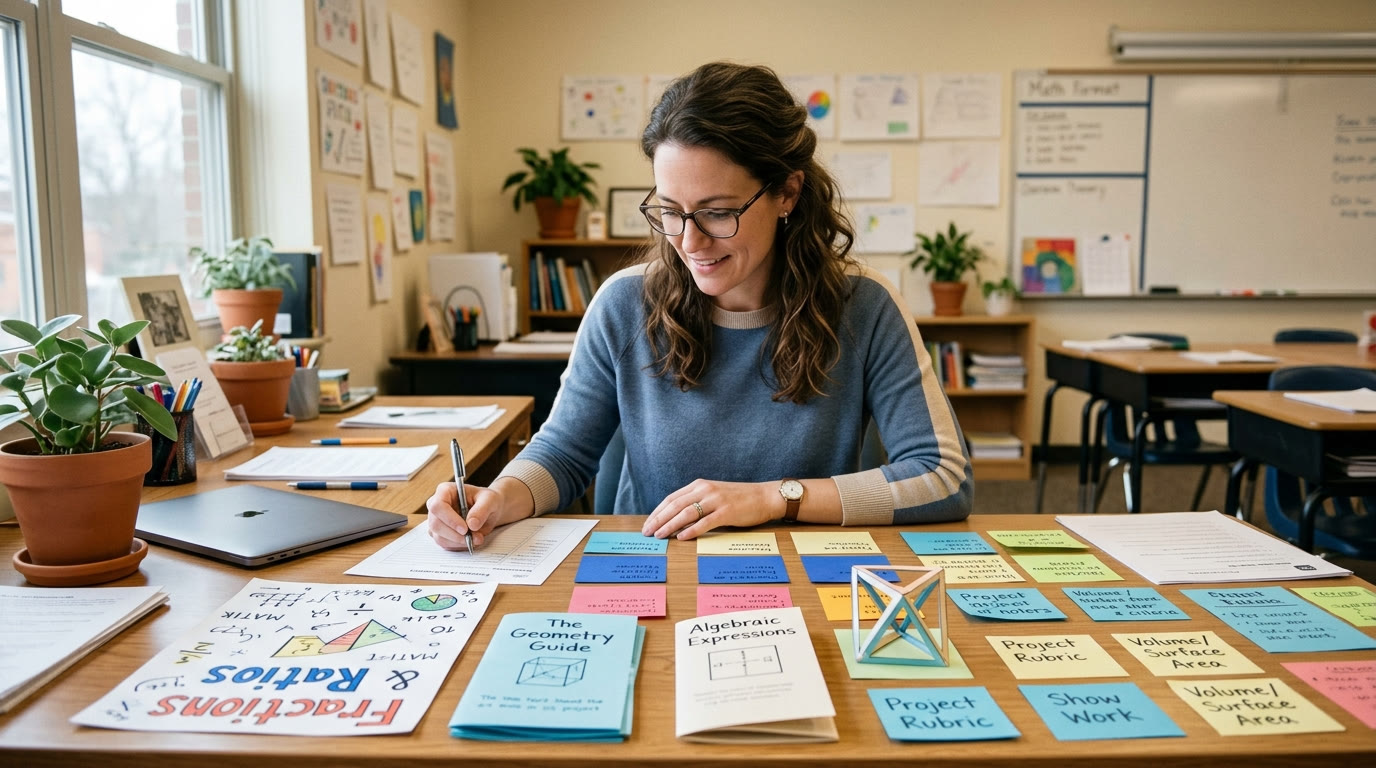
1. Paste the rubric + a student's work (anonymized)
2. Ask: "Write 2-3 peer feedback comments based on this rubric. Make them specific to this work, not generic praise."
3. You'll get targeted feedback that actually teaches.
What still needs your judgment
- The tone. Models can sound cold. You read it first. Rewrite the ones that don't sound like your class.
- The cultural moment. Feedback that's kind in a classroom where everyone knows each other can feel harsh in a class where kids are still building trust.
- The stakes. Feedback on a low-stakes draft is different from feedback on a summative assessment. Set that context before you run the prompt.