category: Differentiation
---
Every teacher has heard the dream: AI creates a custom learning path for each student, adapting in real time as they progress. The reality version is much messier and much more useful. What actually works is AI helping you BUILD the sequence, not replacing your decision-making about who needs what.
Why the full-auto version doesn't work (yet)
The idea sounds beautiful: each kid gets their own curriculum, customized to their pace and learning style, constantly adapting. But in reality:
- You can't know what your student genuinely understands vs. what they just got lucky on
- Adaptive software often isolates kids from peer learning
- The "learning style" part is neuroscience theater, there's no real evidence that visual learners need only diagrams
- You still need to know what each kid needs, and no algorithm can replace your judgment
So the full-auto path fails. But a hybrid version works great.
The template version
Here's what actually works: you design a few learning PATHS (not thousands, just maybe 4-5), and students move through them at different speeds based on what you observe.
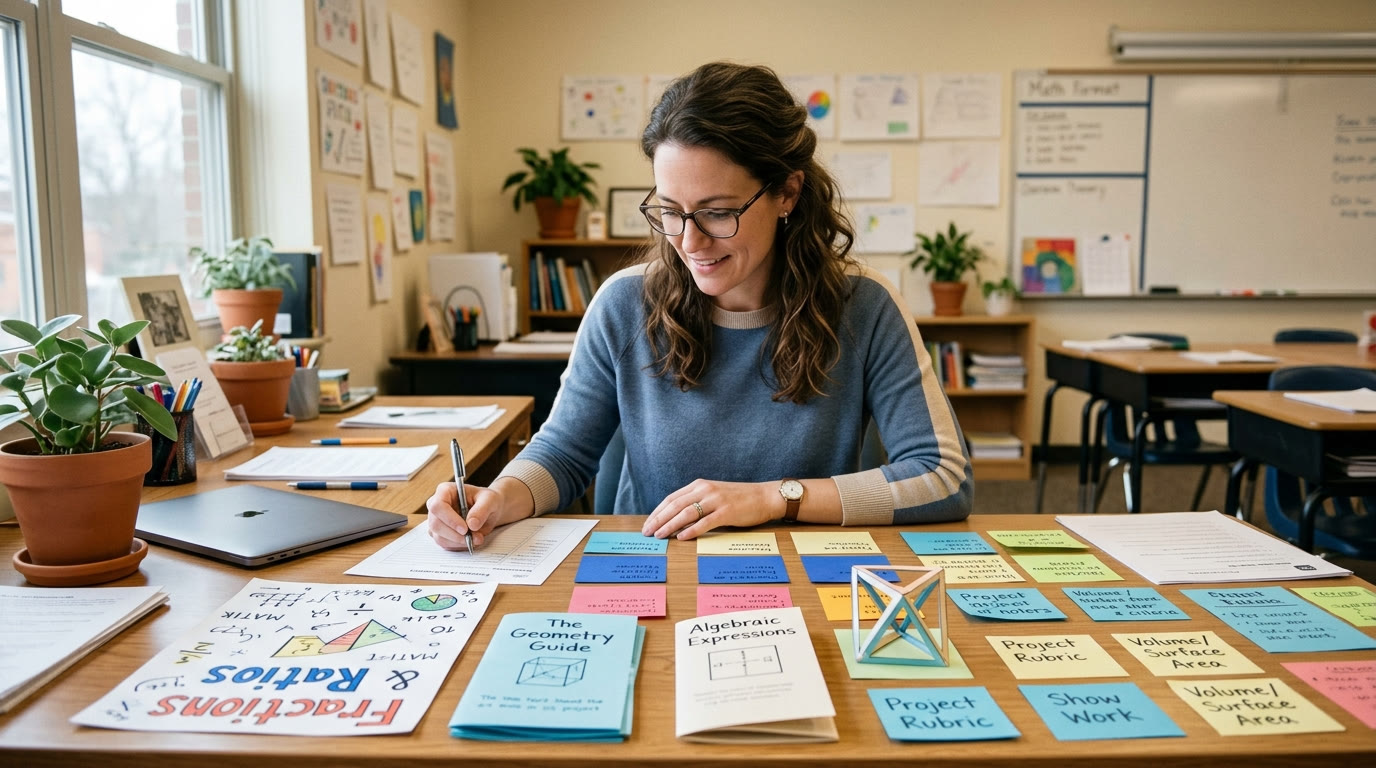
A middle-school math unit on fractions. You might have:
- Path A (Concrete → Pictorial → Abstract): Use physical fraction strips, then draw them, then symbols
- Path B (Conceptual through context): Learn fractions through measurement, recipes, time, meaning first, then symbolism
- Path C (Accelerated): Fewer intermediate steps, moves to operations faster
- Path D (Remedial): Extra time on unit fractions, more repeated practice structures
You didn't personalize for 28 kids. You built 4 coherent sequences. Each student moves through ONE of them based on what you see.
Where AI helps
AI is incredible at building these templates if you give it the right constraints:
"I'm teaching [concept] to [grade level]. Build me a 5-step learning path where a student who struggles with prerequisites can follow it without feeling trapped. Include: the order of ideas, one concrete activity for each step, one application. Assume we have [resources you actually have]. This is for a [time span] unit."
You get back a coherent sequence. You read it, you adapt it (because it won't be perfect), and you have a path. Then you build 2-3 more for different needs.
The role of assessment in this
You need to know where each kid is in the path. This is what makes your judgment non-negotiable:
- Your pre-assessment shows what they already know
- You watch them work, not a quiz score, but how they're thinking
- You decide: is this kid ready to move forward? Do they need another activity in this step? Do they need Path D instead of Path A?
AI can generate quizzes or check-in questions. It can't make the judgment about what to do next.
Adapting within a path
Once a student is on their path, AI can do real work:
- Generate more practice at the exact difficulty the student needs
- Rephrase explanations if the first one didn't land
- Build connected examples (if a student is learning fractions through cooking, generate more cooking examples)
- Create practice problems that spiral back to earlier concepts while building new ones
This is adaptive. It's not replacing your judgment; it's amplifying it by giving you more time to do what you're actually good at (watching and deciding).
The hard parts you still own
- Designing the initial paths (even with AI help, you curate them)
- Reading who each student is and which path makes sense
- Knowing when someone's stuck vs. just moving slower
- Building the culture where being on "Path B" isn't seen as a shame, it's just your sequence
- The social side of learning (who learns together, when to mix the paths up, how to keep the room feeling like one class)
One more move: make it visible
When you explain the paths to students, be explicit:
- "Here's what successful work on this path looks like"
- "These are the steps; I'm going to move you forward when I see this evidence"
- "Path B isn't slower; it's deeper. You get more time with each idea before we layer new thinking on top"
Students need to know why they're on their path. Otherwise, it feels random.
Real talk
This is more work at the start than "everyone does the same thing." But once you have 4 solid paths designed and you trust them, it actually saves you time because you're not making micro-decisions for every kid. You're making 4-5 bigger decisions about sequence, and then watching.
Personalized doesn't mean individualized. It means thoughtfully sequenced. That's where you win.