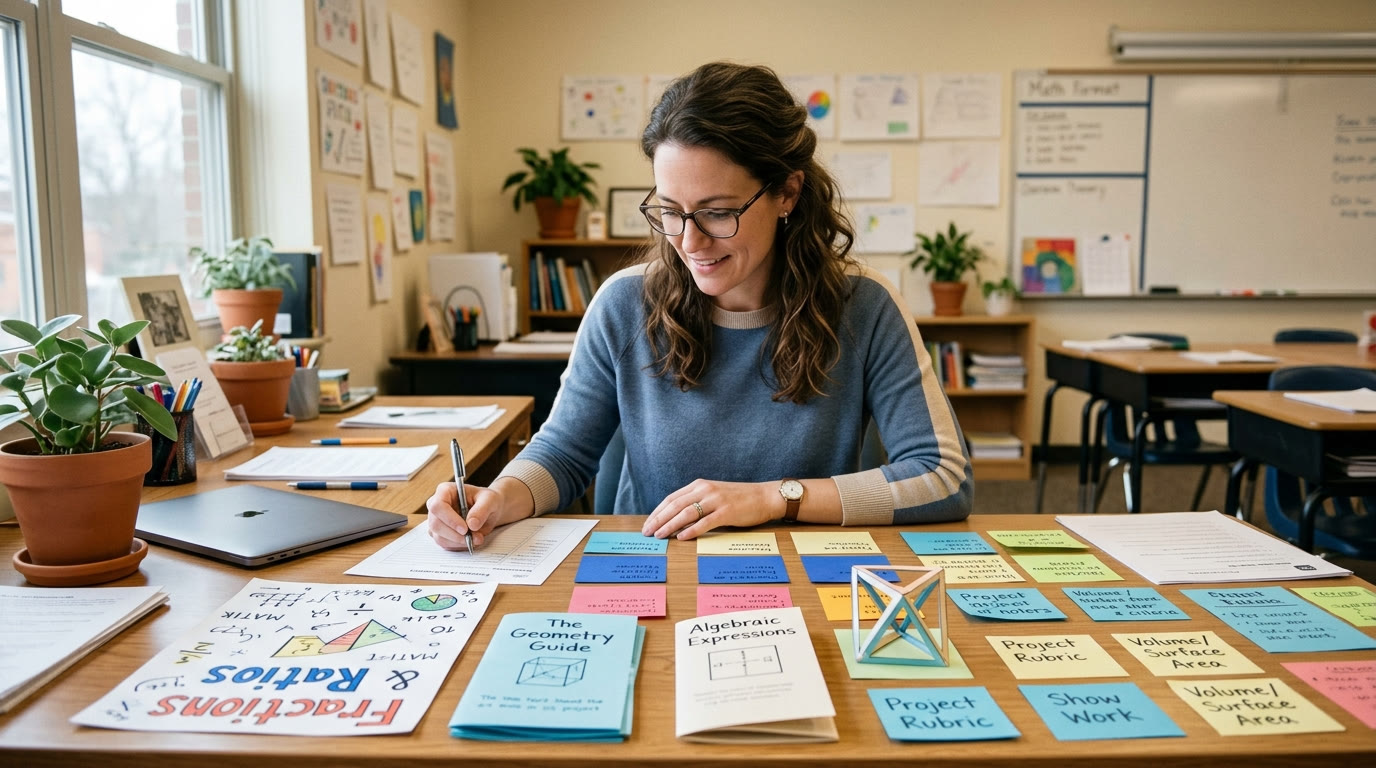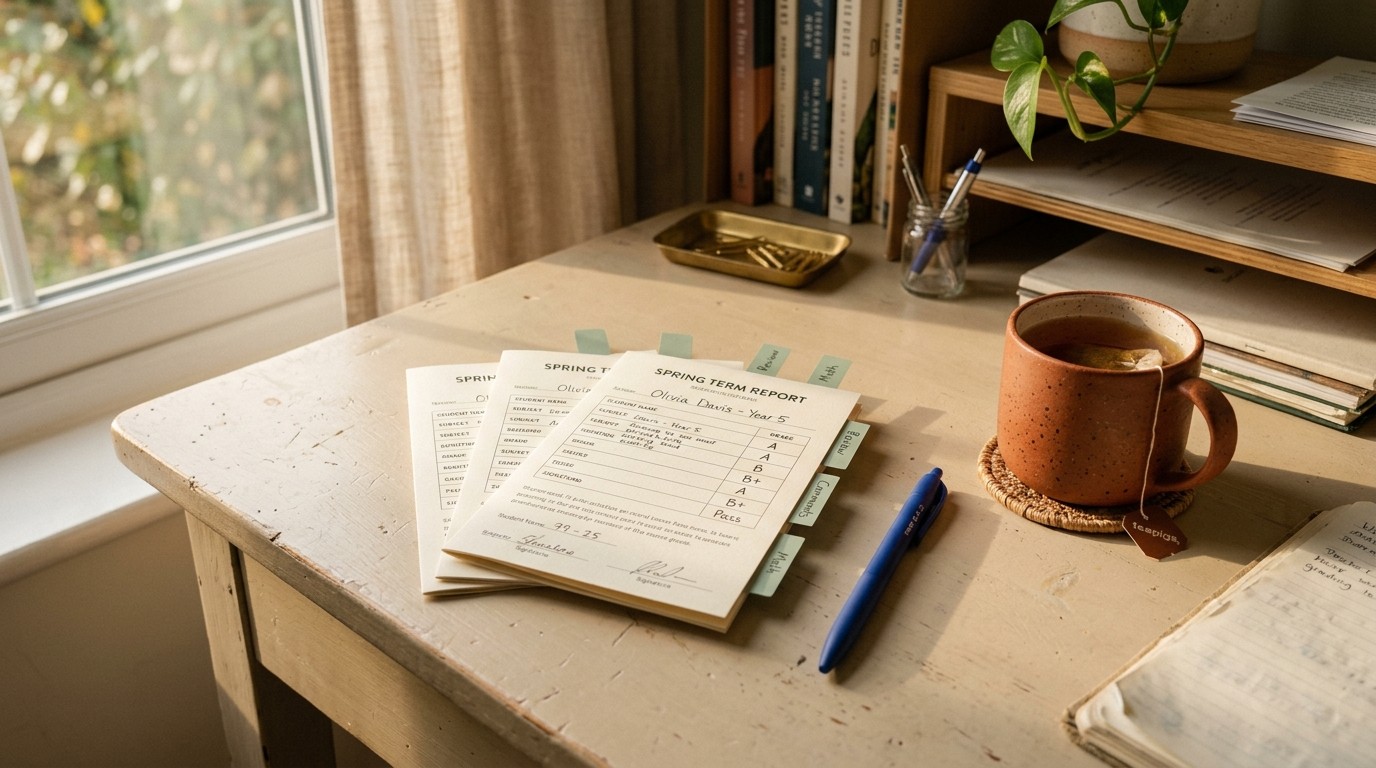
I once wrote "a pleasure to have in class" on eleven different report cards in one sitting, and I'd bet most teachers have done the exact same thing under the exact same time pressure. It's not dishonest, it's just generic enough that a parent reads it, nods, and forgets it by dinner. A comment that could describe any student in the room isn't really about their student at all.
Why generic comments happen, and why it's not really your fault
Thirty-plus comments, each one needing to be specific, warm, and not-copy-pasted, in the time between two other duties, generic language is the natural output of that math. The fix isn't "try harder to be specific," it's a workflow that gets you to specific faster than generic.
What makes a comment actually land
- One specific, observable behavior, not a trait. Not "hardworking," but "revised her lab report twice after peer feedback before turning it in."
- Connected to an actual outcome, so the parent sees why it matters. "Which is why her data analysis section improved noticeably from the last unit."
- One area to grow, framed forward, not as a complaint. "Ready to start defending her claims with more textual evidence next quarter" beats "needs to improve analysis."
- Short. Three sentences a parent reads twice beats six a parent skims once.
A workflow that gets you there fast
1. Before writing any comments, jot two or three one-line observations per student over the grading period, not from memory at report-card time. A phone note during class works fine.
2. Feed those raw notes to the model: "Write a 3-sentence report card comment for a [grade] student. Notes: [paste your one-line observations]. Include one specific behavior, why it matters, and one forward-looking growth area. Tone: warm, specific, no generic praise like 'pleasure to have in class.'"
3. Read every draft. If a sentence could describe any student, it's not done, add the detail back in yourself.
A quick before/after
Before: "A pleasure to have in class. Works hard and is a good student."
After: "Consistently the first to volunteer a counterargument in discussion, which pushes the whole class to think harder. Next quarter, I'd like to see that same instinct show up in her written analysis, not just out loud."
Same three sentences of effort. One of them a parent will actually remember at conferences.
Where AI is genuinely useful, and where it isn't
Useful: turning your raw, messy one-line observations into a warm, well-structured comment fast, and generating a few phrasing options so you're not staring at a blank box for the fifteenth comment in a row.
Not useful: inventing the observation itself. A comment about a behavior that didn't happen is worse than a generic one, parents notice, and it undermines every comment you write afterward. The specific detail has to be real.
The habit that makes this sustainable
The bottleneck was never the writing, it was not having anything specific in front of you when report cards were due. A running note, even three words per student every couple of weeks, "asked great question" or "still rushing transitions", turns report-card time from a blank-page problem into an editing problem, which is a much faster problem to solve.
Our [report comments and feedback generator](/student-feedback) turns your raw performance notes into varied, specific, strengths-first comments, so the writing step is fast once you've got the real observation in hand.