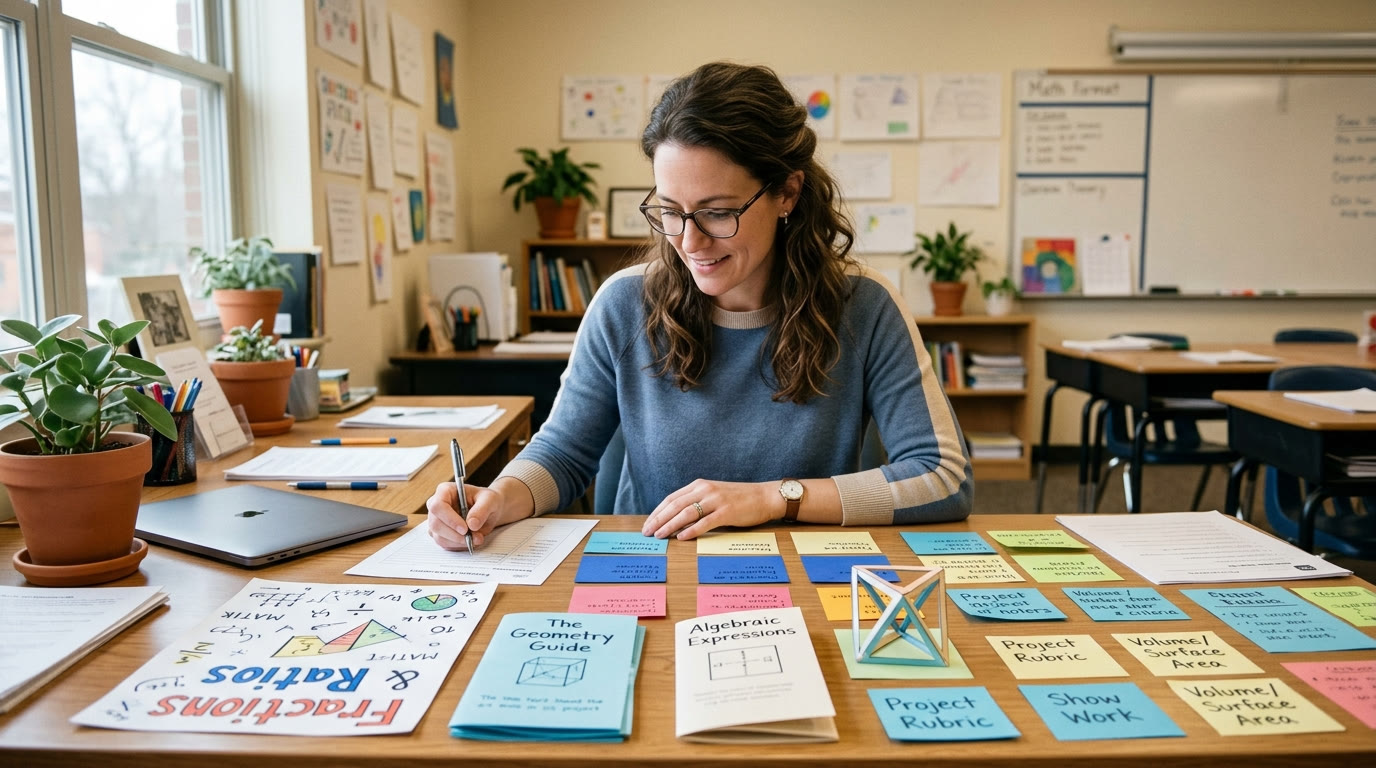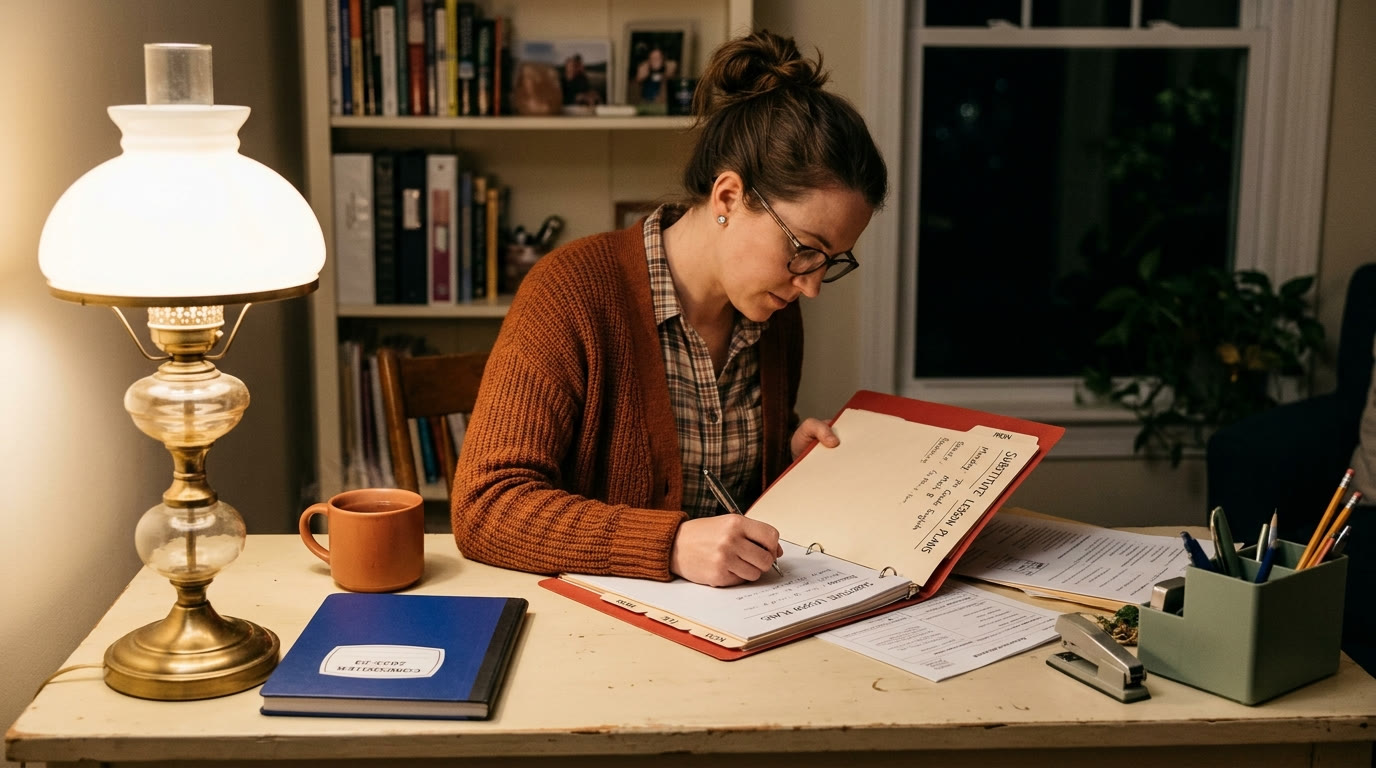
The sub plan that looked perfectly reasonable at 10pm the night before always seems to unravel by third period. Not because the activity was bad, but because it assumed a level of trust and classroom rhythm a substitute walking in cold simply doesn't have yet. A plan built for you doesn't automatically work for someone your students have never met.
Why the plan you'd teach yourself usually fails for a sub
You can read the room. You know when "independent work time" means actual independent work and when it means a countdown to chaos. A substitute has none of that context on day one, which means the plan itself has to supply the structure you'd normally provide in real time.
What an actually sub-proof plan needs
- A task with a visible product, not just "work quietly." "Read pages 40-52 and answer questions 1-5 in your notebook" survives a sub day. "Independent reading time" does not, there's no way for the sub to tell engaged from checked-out, and kids know it.
- Explicit, boring classroom-management notes. Where's the bathroom sign-out sheet. What's the actual signal for quiet (not "the usual," write out the actual phrase or gesture). Which two or three students need a specific seat or specific check-in. A sub who doesn't know your systems will improvise ones that don't match yours, and kids notice the mismatch immediately.
- More material than you think you need. Twenty extra minutes of a plan that finishes early is a much smaller problem than fifteen minutes of a sub with nothing left and a room of middle schoolers.
- A backup that requires zero setup. If the video won't load or the printer's out of toner, what's the version that just needs the textbook and a pencil? Plan B should already be written, not improvised at 7:15am by whoever's covering.
- Names. A seating chart, or at minimum which student to ask if something's unclear. A sub with a name to call on manages a room a substitute with just "the class" as an abstraction can't.
A structure worth reusing
1. Do-now (5 min): something self-explanatory, on the board or handout, no instructions needed from the sub.
2. Main task (20-30 min): a task with a visible, checkable product.
3. Backup/extension (10-15 min): zero-setup, for the kids who finish early or the moment technology fails.
4. Wrap-up (5 min): a specific, simple exit task, one sentence, one question, something that proves the period happened.
Where a first draft saves the 10pm scramble
Building a plan this specific from scratch, the night you find out you're out sick, is exactly the kind of task that eats an hour you don't have. Our [lesson plan generator](/lesson-plan-generator) drafts a full period plan with a clear task and backup activity from your unit topic and time available, and pairing it with the routines in your [classroom management plan](/classroom-management) means the sub actually knows your signals instead of guessing at them. You still proofread it and add the two or three kid-specific notes only you know, but the structure is already there instead of a blank document at 10pm.