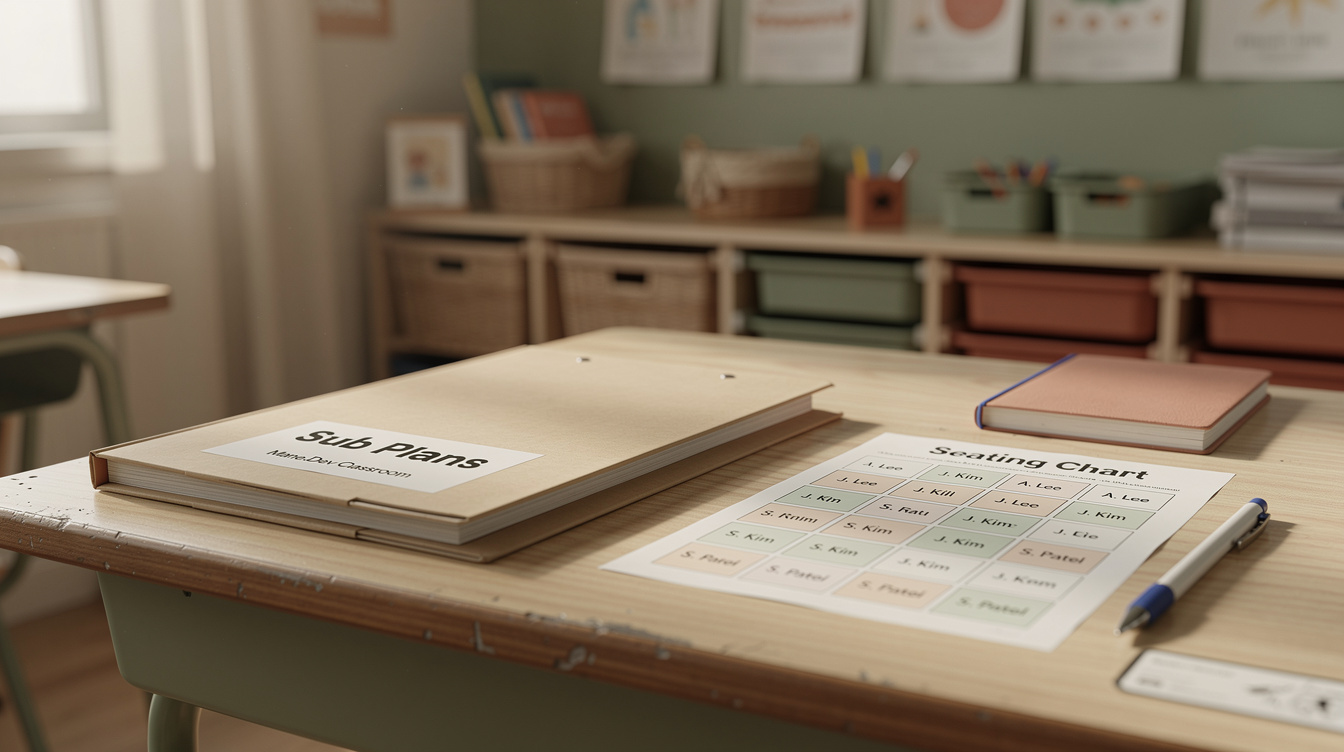
You come back from a sick day to find the sub skipped half your plan, ran the wrong activity, or spent the period on a worksheet you didn't even leave, and when you ask what happened, the honest answer is usually that your notes technically covered it, but not clearly enough for someone who's never met your students to actually follow under pressure. Sub notes that make sense to you, who knows the room, often don't make sense to someone walking in cold.
Why "here's the lesson plan" isn't enough
Your regular lesson plan assumes context a substitute doesn't have: which students need a redirect and how you usually give it, where materials actually live versus where the supply closet suggests they might be, what "independent reading time" looks like when it's actually going well versus falling apart. A sub without that context either freezes at the first thing that doesn't go as written, or improvises in a direction that has nothing to do with your plan.
Writing notes that hold up without you in the room
1. Write logistics separately from instruction, and put logistics first. Where the bathroom pass is, what to do if a student needs the nurse, and who the go-to office contact is should be answered before the sub even gets to the lesson, that's the information that turns a small hiccup into a manageable one instead of a lost period.
2. Name the two or three students who need a specific approach, briefly and kindly. "If [student] gets frustrated with the worksheet, redirecting to the quiet corner works better than repeating the instruction" is more useful to a sub than a general behavior policy.
3. Build in a clear fallback for every activity, not just the main plan. If the plan requires materials the sub can't find or technology that doesn't cooperate, one specific backup activity per period prevents the improvised filler that derails the whole day.
Our [classroom management plan tool](/classroom-management) can generate the logistics and behavior-expectations layer of your sub notes, routines, redirects, what a normal day looks like, so you're not rewriting that context from memory every time you're out. For the actual content of the day, our [lesson plan generator](/lesson-plan-generator) can produce a sub-friendly version of your plan with clearer, more explicit steps than the shorthand version you'd write for yourself.
What you still have to build in yourself
- The specific trust calls about your students. No template knows which two kids shouldn't sit together or which student needs an extra minute of processing time before responding, that's classroom knowledge that has to go in by hand.
- Deciding how much detail is actually useful versus overwhelming. A ten-page sub packet gets skimmed, not read. Knowing what a substitute genuinely needs versus what you'd want to include out of anxiety is a judgment call.
- What happens the day you're back. Debriefing quickly with the sub or the front office about what actually happened tells you whether your notes worked, and what to adjust before the next time you're out.
Sub notes that actually get followed aren't necessarily longer. They're organized around what a stranger walking into your room actually needs to know first, which is usually not the same order you'd explain it in yourself.