Your kid gets a generic essay back from ChatGPT and thinks "this is trash." You read the essay and think "the prompt was trash. The model did exactly what was asked."
This is the gap. Your students don't know how to brief an AI the way you do.
What you do that they don't
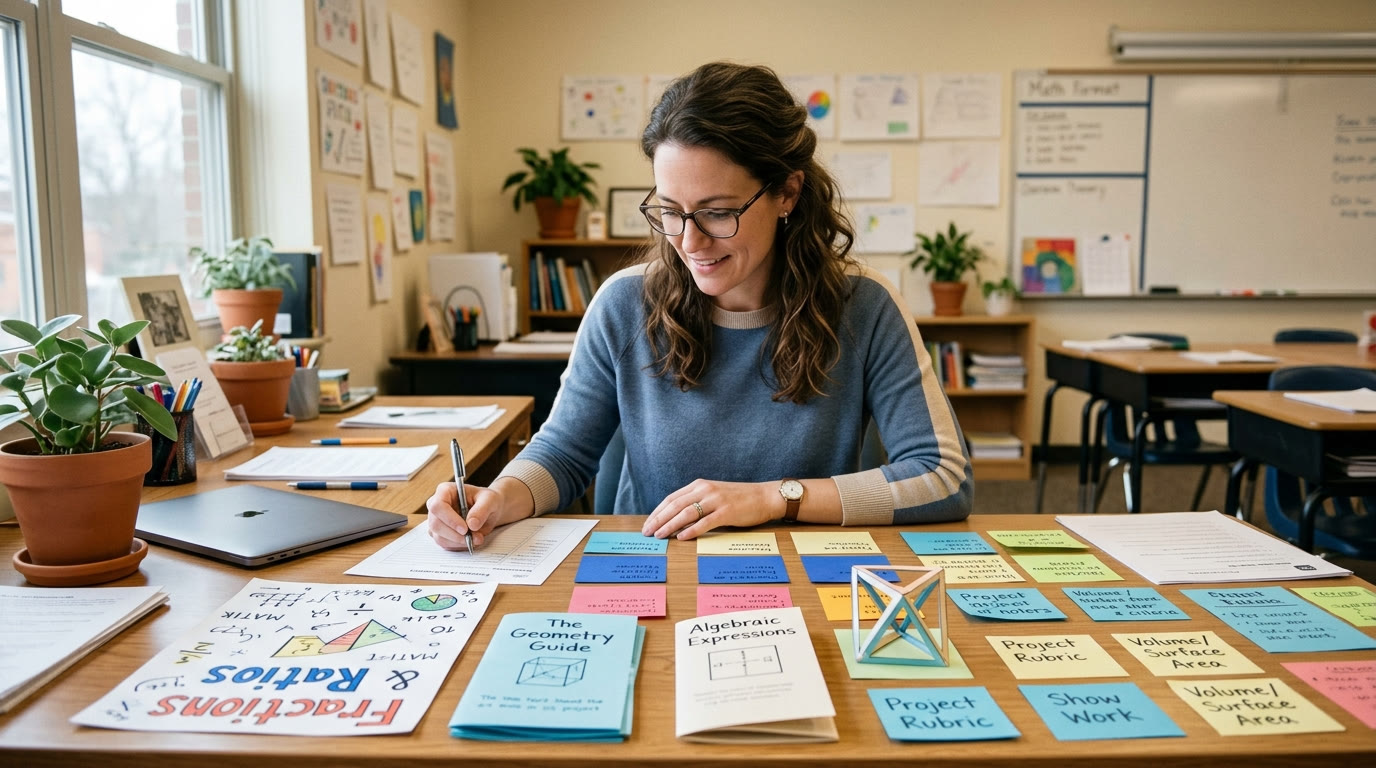
When you use AI to draft a lesson, you don't say "make a lesson plan." You say something like:
"You are an 8th-grade science teacher. Write a 50-minute lesson plan for photosynthesis for a class of 28 students. I have a projector, but no lab equipment. Three students have severe visual impairments. I need descriptions of images, not just images. Here's last year's standards. Here's what they already know. Here's what they struggle with. Make it interactive, not a lecture. Include one hands-on activity with household materials. End with an exit ticket that tells me if they got it."
That's not a prompt. That's a briefing. Your student saying "make a lesson plan" to an AI is like a student briefing you in one sentence and expecting perfection.
How to teach it
Step 1: Show the bad version.
"Make me an essay about climate change."
Show them the generic result. "Boring, right? That's because the model doesn't know what 'good' is yet."
Step 2: Show the good version.
"Write a 1,000-word essay for an 8th-grade science class on climate change. I need it to explain the difference between weather and climate, cover the greenhouse effect, and end with one real solution that a student could actually implement at home. Use clear language, at least two scientific sources, and one relatable example from the news in the last year."
Show them the difference.
Step 3: Have them write a good prompt.
Give them a low-stakes assignment. "You're going to use AI to brainstorm for your essay. Write the prompt you'd give an AI to get something useful. Be as specific as you were in my example."
Step 4: Have them use it.
They paste the prompt into the tool. They get a better result. They learn that specificity matters.
The rule to teach
"AI is only as smart as your instructions. If you give it nothing, you get nothing. If you give it context, you get something useful. Teaching it how to help you is a real skill."
This is the skill gap that separates kids who use AI well from kids who use it once and give up.
The [lesson plan generator](/lesson-plan-generator) shows the kind of structure and specificity that works, and the [academic paper outline tool](/academic-paper-outline) helps with the thinking framework before any writing happens.