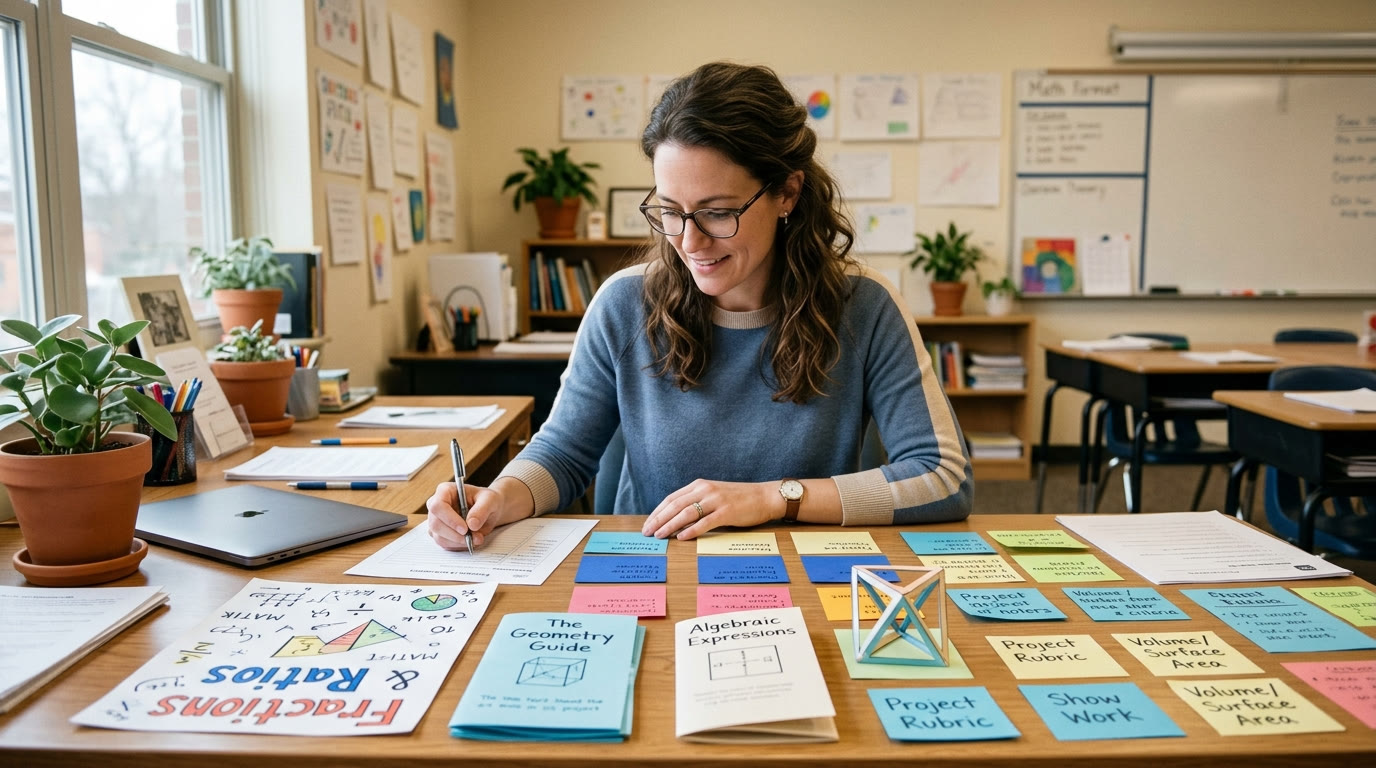
A twice-exceptional (2e) student is gifted and has a learning disability at the same time, and the two don't cancel each other out the way people sometimes hope. A kid can give the most insightful answer in a Socratic seminar and then turn in a blank worksheet twenty minutes later, not because he didn't understand the content, but because the writing demand short-circuited before the ideas ever made it to the page. That contradiction is exactly why 2e students are so often missed: they don't look like either "gifted" or "struggling" on their own, they look like both, which reads as inconsistency instead of a pattern.
Why the standard plans miss these kids
A gifted plan assumes the student needs more depth and moves on. A support plan assumes the student needs the material broken down and slowed down. A 2e student often needs both in the same lesson, sometimes on the same task, and a plan built for only one half leaves the other half unaddressed. Enrichment without support looks like the student "should be able to do this already." Support without enrichment looks like the student is bored and starts checking out.
What dual differentiation actually looks like
- Separate the thinking from the output. If writing is the bottleneck, let the student dictate, use speech-to-text, or answer verbally before ever asking for a paragraph. You're checking whether they understand equivalent fractions, not whether they can hand-write four sentences about it under time pressure.
- Compact what's already mastered, support what isn't. A 2e student might not need the first three practice problems at all but genuinely needs extended time and a graphic organizer for the written reflection. Compacting one part while scaffolding another, in the same assignment, is the actual skill here.
- Watch for the mismatch, not just the grade. A strong verbal answer paired with a failed written task isn't a discipline problem or a laziness problem, it's data. That gap is usually the clearest signal of where a 2e profile is hiding.
- Give an extension menu instead of a single "gifted" add-on. A menu the student picks from, an independent research question, a chance to teach the concept to a peer, a more complex version of the same problem, tends to land better than a single "advanced" worksheet that ignores whatever the underlying disability actually is.
- Loop in whoever holds the IEP or 504. A dual plan works best when the enrichment side and the support side are written by people talking to each other, not two separate documents that never reference the same student's actual day.
A quick before/after
Before: "Struggles with written responses, needs more scaffolding" sitting next to "clearly gifted, needs more challenge" in two different notes about the same kid, with no plan connecting them.
After: "Dictates written reflections due to a processing disorder; compact routine practice problems and route the saved time into an independent extension question on the same standard." One plan, both halves addressed, in the same task.
Where this gets easier to write
Our [gifted / enrichment plan generator](/gifted-plan) and [differentiation plan generator](/differentiation-plan) can each take a student's specific strengths and needs and draft a plan around them, run together, they let you write the enrichment and the support side for the same kid instead of picking one and hoping the other resolves itself.
The question worth asking
If you find yourself describing a student as "bored but also behind," that's not a contradiction to resolve by picking a side. It's the exact profile a dual differentiation plan is built for, and the sooner it gets written down as one plan instead of two competing labels, the sooner both halves of that kid actually get taught.