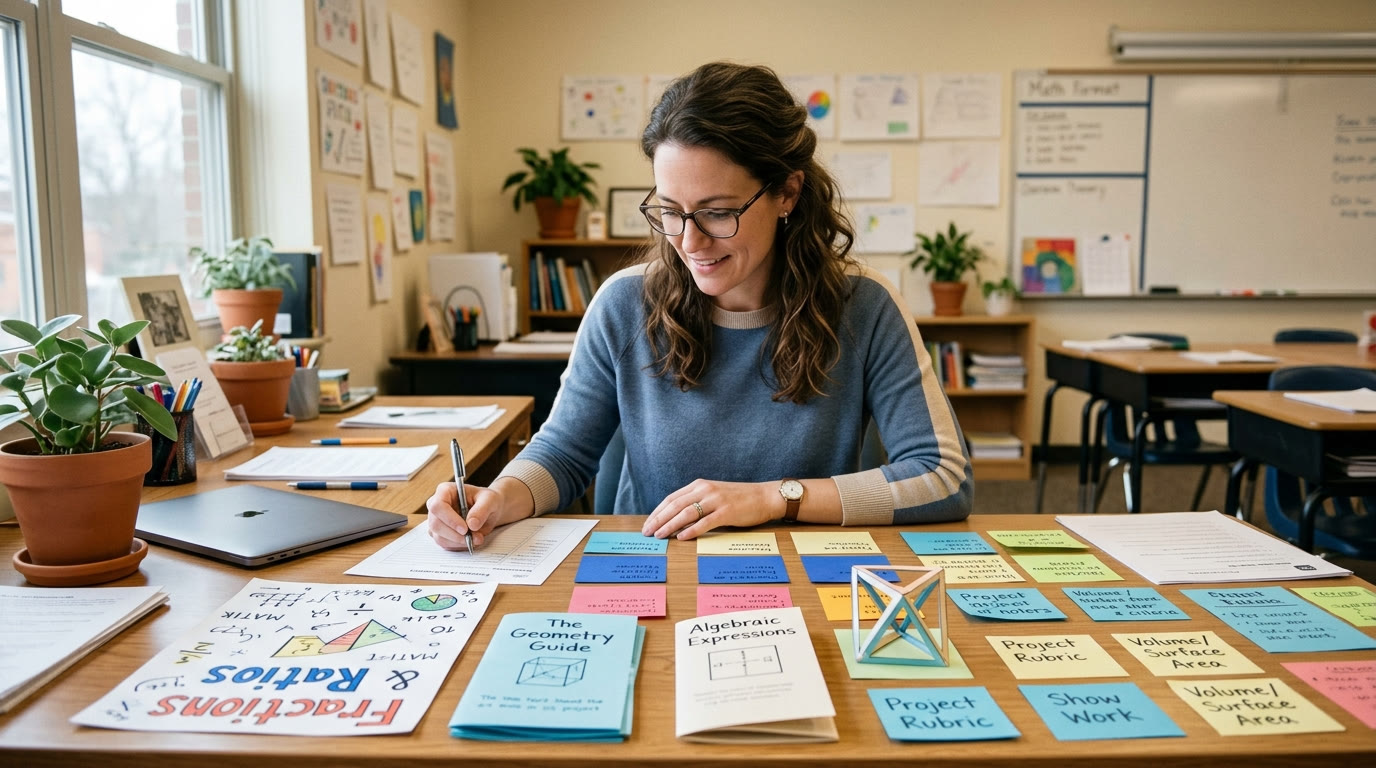
I recorded my first review video the way I teach in person, warm-up, full explanation, three examples, wrap-up, and it ran fourteen minutes. Watch time on that video was under two. The lesson wasn't the problem, the format was, a video isn't a recorded class period, it's a different medium with its own rules.
Why a good in-person lesson makes a bad video script
In the room, you have body language, pacing you can adjust in real time, and students who can raise a hand mid-explanation. None of that exists on a recording. A script that reads like your verbal lesson plan front-loads too much setup before it gets to the point, and a viewer who's already lost by minute two just closes the tab.
What a script that gets watched actually has
- A hook in the first 10 seconds, not a slide of the day's objective. "Here's a mistake almost everyone makes on this" beats "Today we will learn about..." every time.
- One idea per video. If the lesson covers three sub-skills, that's three short videos, not one long one. Students can rewatch a 90-second video on the one part they missed. They will not rewatch minute 8 of a 12-minute video to find it.
- A visual cue written into the script itself, not left to chance while filming. "[Show worked example, circle the sign error]" belongs in the script, not your head, especially if someone else might ever record from it.
- A built-in check for understanding, a pause-and-try-it moment, not just a passive watch straight through.
A structure you can reuse every time
1. Hook (10-15 seconds): the mistake, the surprising result, or the question that sets up why this matters.
2. Explanation (60-90 seconds): the one idea, explained once, cleanly, with a visual cue noted for each key moment.
3. Worked example (30-60 seconds): show it applied, not just described.
4. Check (15-30 seconds): "pause and try this one yourself" before you reveal the answer.
5. Close (10 seconds): what to do next, not a generic "thanks for watching."
Total: under four minutes. That's the length students actually finish.
Where this gets easier to write
Our [educational video script tool](/educational-video-script) takes your topic, audience, and target length and returns the hook, explanation with visual cues, and a built-in comprehension check, already structured the way a short video needs to be, not the way a live lesson plan is. It's a natural pair with a [discussion questions](/discussion-questions) set if you want the video to open a class conversation instead of standing alone.
Where this actually pays off beyond the first recording
The real value isn't the one video, it's the library. A folder of 90-second explainer videos, one per sub-skill, becomes your standing answer to "I was absent, what did I miss," your review-week resource, and your sub plan backup, all from scripts you already wrote once.
The test of a script worth filming
Read it out loud with a timer running. If you're still on the hook at 20 seconds, or still explaining before any visual cue shows up, cut it before you hit record, not after you've already filmed a version nobody finishes watching.