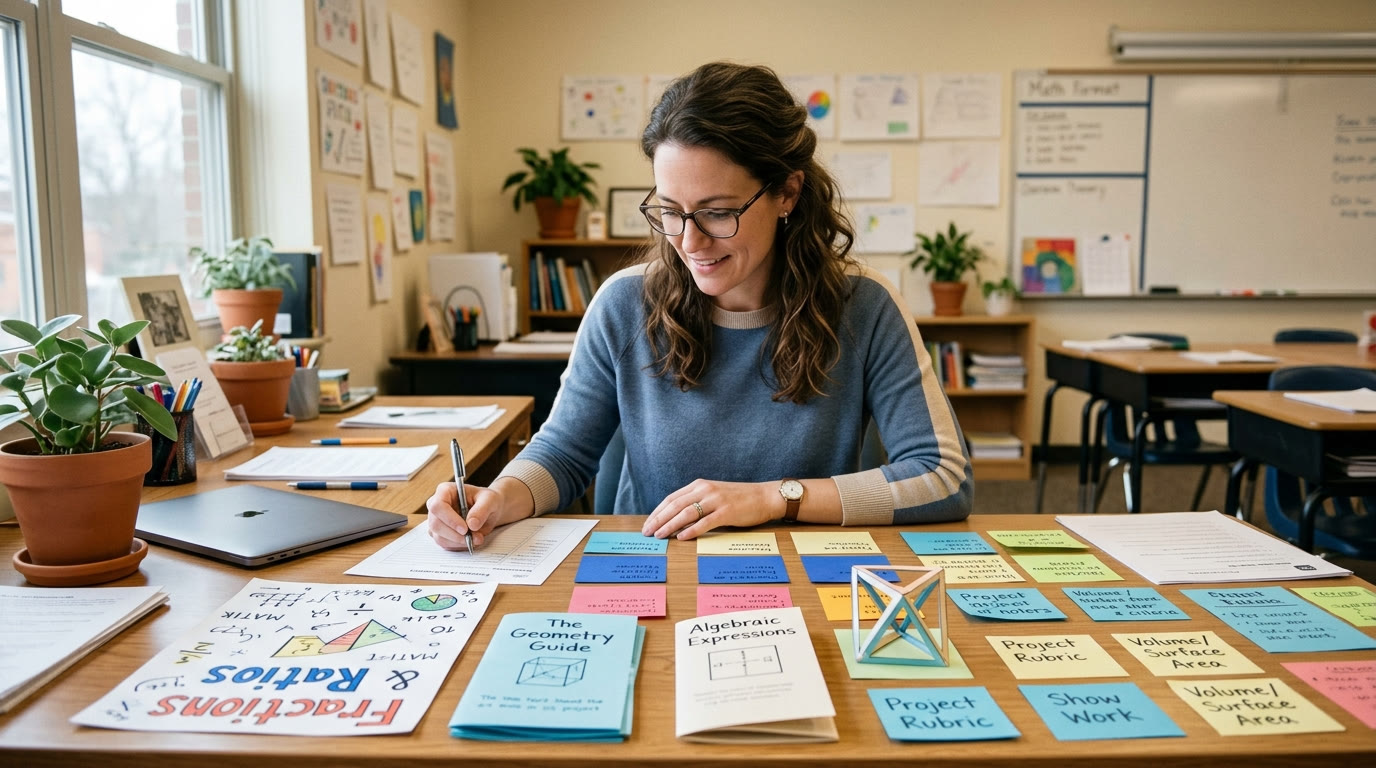
Most lesson planning happens one grade, one classroom, one year at a time, which is fine until a lesson quietly assumes something the students in front of you were never actually taught, or sets up a skill that next year's teacher has no idea is coming. Vertical alignment is just checking those two directions on purpose instead of finding out by accident in October.
The assumption every lesson is making
Every lesson plan leans on something from an earlier grade, whether it says so or not. A fractions lesson assumes multiplication facts. An essay-writing unit assumes paragraph structure was actually taught, not just mentioned. The lesson doesn't fail because the concept was too hard, it fails because the foundation it was quietly built on was never actually there.
How to check both directions
- Look one grade back before you plan the unit, not after it goes badly. Pull the prior grade's standard for the same strand and read it side by side with yours. Five minutes here catches the gap before it shows up as a room full of confused faces.
- Ask what the lesson is setting up, not just what it's teaching today. If next year's teacher is going to assume your students can already do X, make sure X actually got taught this year, not just introduced and moved past.
- Name the prerequisite explicitly in your own plan. "Requires: multiplication facts through 12, taught in 3rd grade" is a note that takes ten seconds to write and saves you from discovering the gap live, in front of the class.
- Talk to the grade above and below once a year, not never. A single 20-minute conversation, "here's what I'm assuming coming in, here's what I'm sending you," surfaces more gaps than a semester of assuming everyone's on the same page.
- When the gap is real, teach the missing piece, don't route around it. A quick five-minute refresher on the actual prerequisite beats redesigning the whole lesson to avoid needing it.
A quick before/after
Before: a lesson plan written in isolation, assumptions about prior knowledge left unstated, the gap discovered mid-lesson when half the class is lost.
After: a five-minute check against the grade before, prerequisites named explicitly in the plan, and a known gap addressed with a short refresher instead of a surprised class.
Where this gets easier to check
Our [unit plan generator](/unit-plan) lets you note prerequisite standards directly in the plan so they're visible before you teach, not discovered during, and our [learning objectives tool](/learning-objectives) is useful for writing the specific, measurable version of what a lesson actually requires walking in, instead of a vague sense that "they should know this by now."
The question worth asking before any new unit
What does this lesson assume walked in the door, and was that thing actually taught, or just supposed to have been? One honest answer to that question, five minutes before you plan, is what vertical alignment actually is.