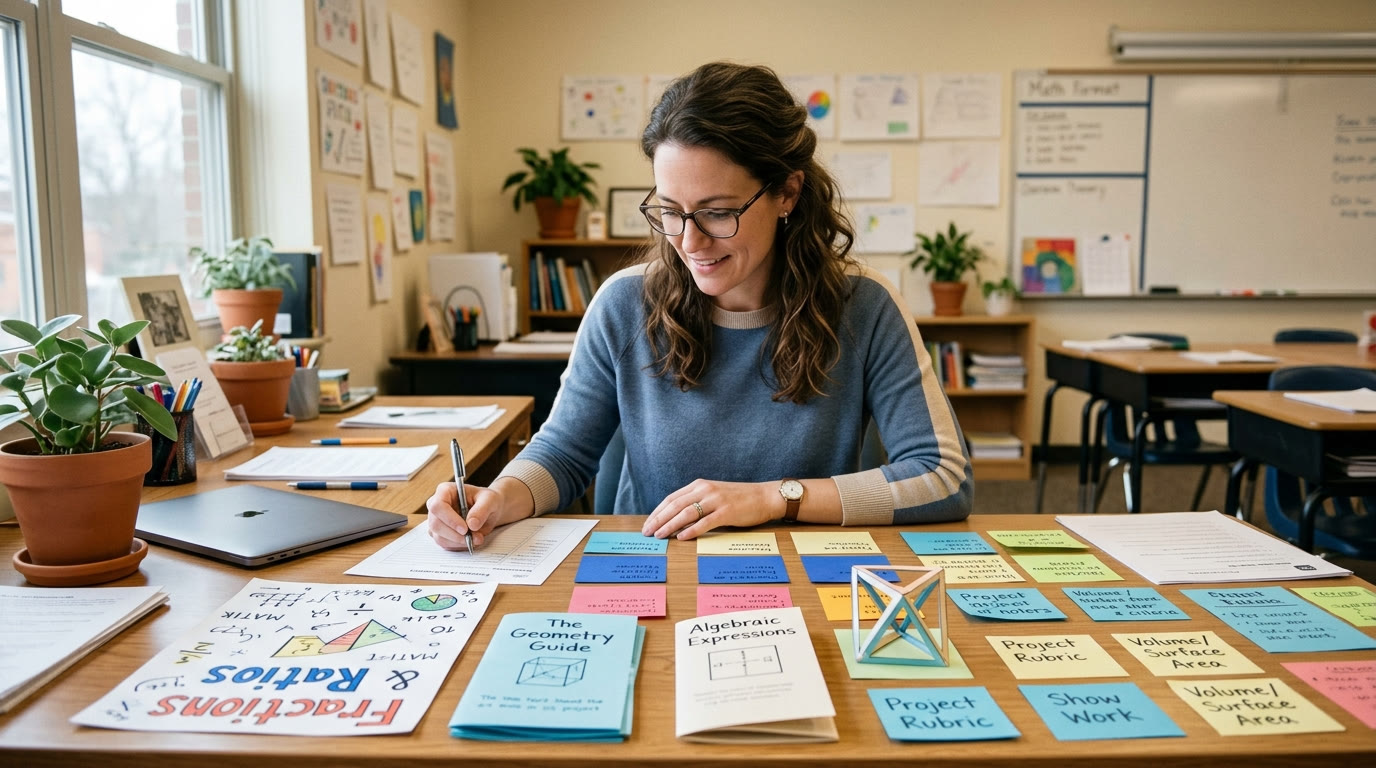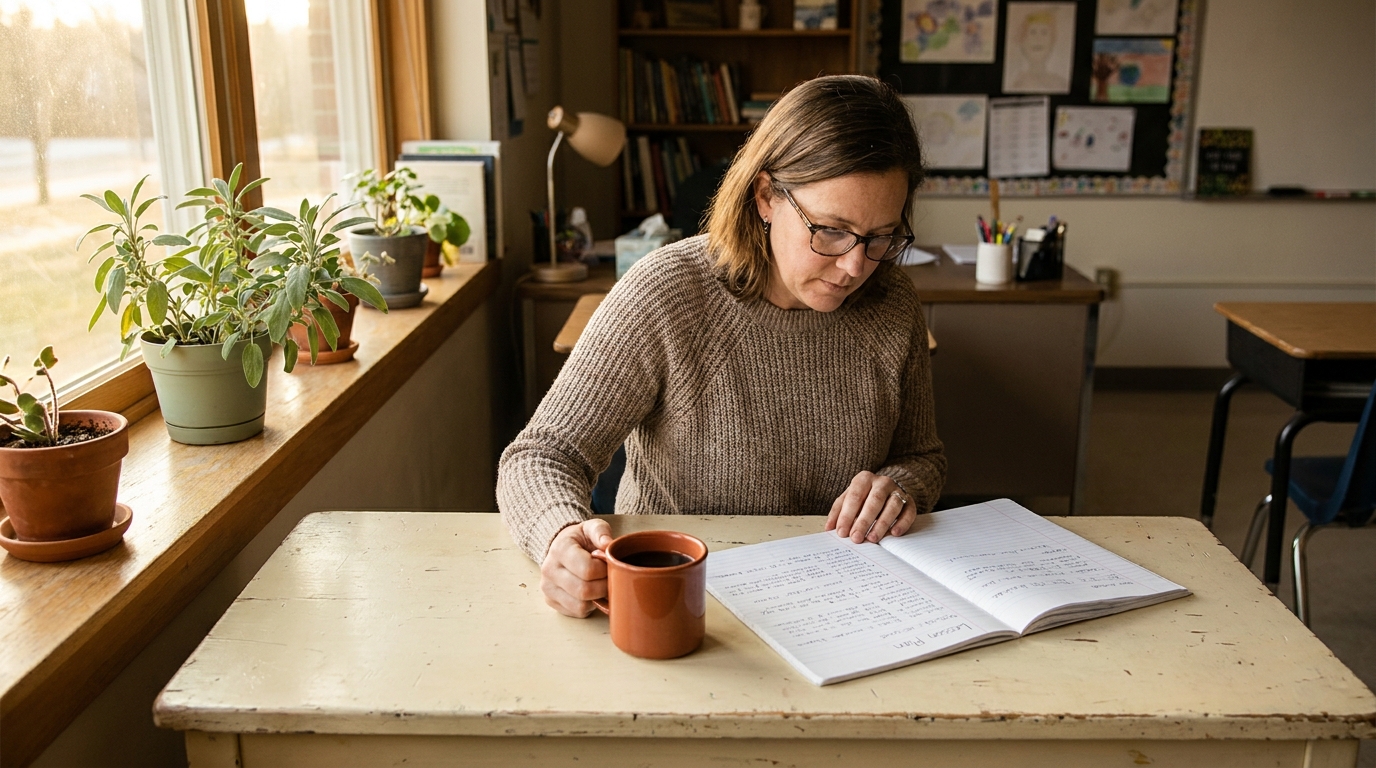
The dread around an observation rarely comes from the actual thirty minutes of teaching. It comes from the vague parts around it: not knowing exactly what your administrator is looking for, scrambling to find last year's feedback the morning of, writing a pre-observation form at 11pm the night before. Most of that is preparable days in advance. The lesson itself should be the easy part.
Separate what you control from what you don't
You don't control your administrator's mood, the fire drill that might interrupt period three, or which kid decides today's the day to test a limit. You do control your pre-observation paperwork, whether your lesson visibly connects to a standard, and whether you've actually looked at your last round of feedback before walking in. Prep the second list. Let the first list go.
A real prep checklist, not a vague one
- Pull your last observation's feedback and reread it the week before, not the morning of. If your last note said "check for understanding more often mid-lesson," build two visible checkpoints into this lesson. Growth on a named area is the single most convincing thing an evaluator sees.
- Write the pre-observation form like a colleague is reading it, not a form. Name the standard, the specific class you're teaching (26 students, 4 IEPs, whatever's true), and what you want the observer to actually watch for. Specificity reads as competence.
- Pick a lesson with a visible structure, not necessarily your flashiest one. An observer needs to see a hook, a check for understanding, and a close in thirty minutes. A lesson that's all one long activity is harder to score well, even if it's a good lesson.
- Have a one-sentence answer ready for "why this lesson, why today." Not because you'll always be asked, but because thinking it through beforehand makes the lesson choice itself sharper.
- Do a five-minute self-reflection right after, while it's fresh, before the post-conference. What actually happened versus what you planned. It gives you language for the conversation instead of guessing what they noticed.
The part nobody tells new teachers
An observation is evaluating a snapshot, not your whole practice, and evaluators know that. A lesson that goes sideways because of a fire drill or a rough Tuesday isn't the verdict on your teaching, it's one data point. Treating it as the whole verdict is what turns a normal work day into a dreaded one.
Where this gets easier
Our [lesson plan generator](/lesson-plan-generator) can help you build a standards-aligned lesson with a clear hook, checkpoint, and close for the day itself, and our [classroom management plan generator](/classroom-management) can help you write routines down clearly enough to reference in your pre-observation form instead of describing them from memory under time pressure.
Before the day
The week before, do the paperwork. The night before, pick a lesson with visible structure and go to bed. The morning of, remember it's one snapshot. That's the whole prep, and it's almost entirely things you can do days in advance, not the morning of.