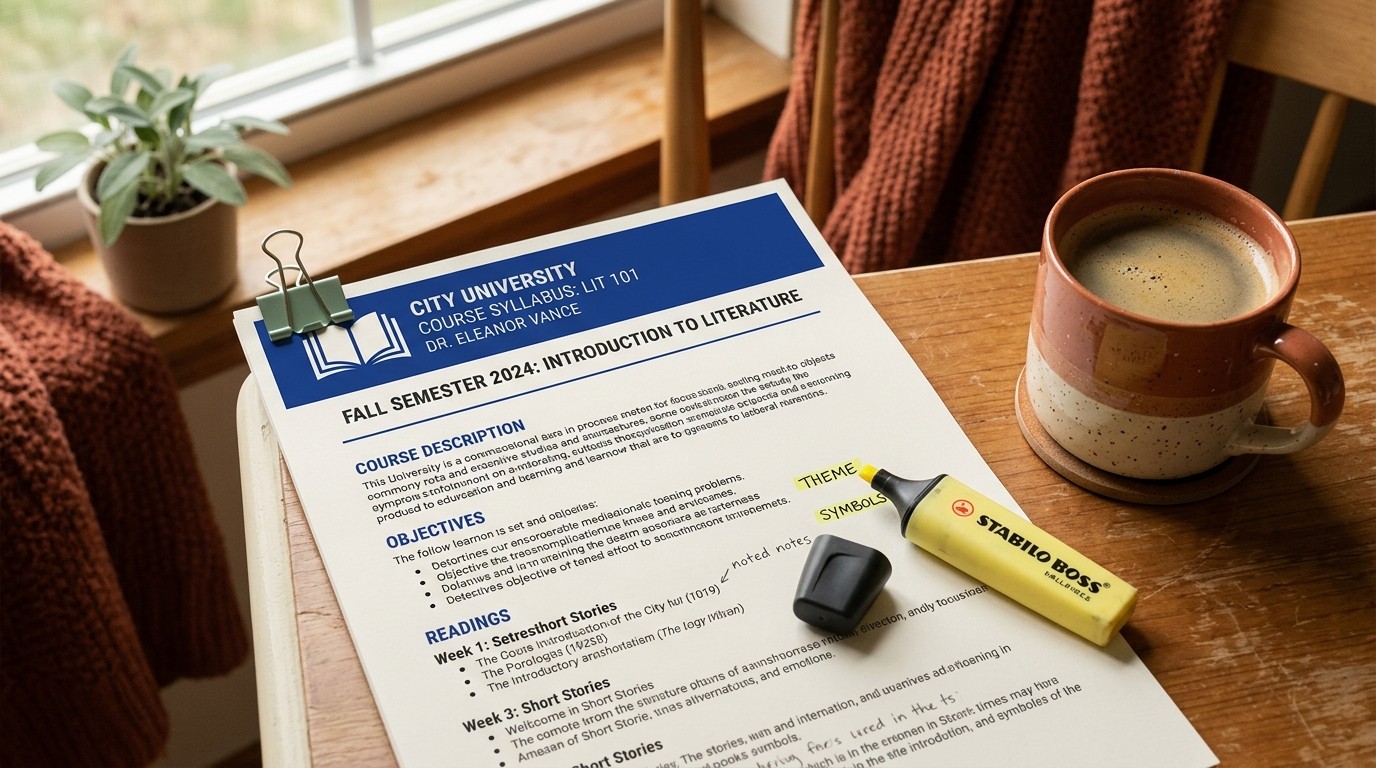
I used to write my syllabus the way I imagine most teachers do, copy last year's, change the dates, add whatever new policy the department wants this year. Students skimmed it for the grading breakdown on day 1 and never opened it again. Then a student asked me in November what the late-work policy was, word for word what was on page 2, and I realized the syllabus had failed at its one job: being a reference document anyone actually uses.
Why the standard syllabus gets ignored
It's usually a wall of policy prose, written in the voice of a handbook, not a person. Nobody re-reads a wall of prose in October to answer a specific question. They ask a friend, or they guess, or they email you the thing that's already on page 2.
What makes a syllabus get reused
- Answerable in one glance. A student with a question ("can I turn this in late?") should find the answer in five seconds, not by reading a paragraph.
- Written like you'd actually say it. "Late work loses 10% per day, up to 3 days, then it's a zero, talk to me before that happens" beats a formal paragraph saying the same thing.
- The grading breakdown up top, visually distinct. This is the first thing every student looks for. Don't bury it on page 3.
- A short "how to succeed in this class" section. Concrete, specific to your subject. Not "study hard," but "the reading guides matter more than the textbook, do those first."
A prompt that gets you a usable draft
"Write a course syllabus for [subject/grade]. Include: course description, grading breakdown ([your weights]), late-work policy ([your actual policy]), materials needed, and a short 'how to succeed in this class' section specific to [subject]. Tone: direct, like a teacher talking to students, not a legal document. Format each policy as a short, scannable statement, not a paragraph." You'll still need to swap in your real policies and calendar, but the shape and tone come out right.
The two things worth doing that a draft can't do for you
1. Read it out loud once, the way you'd actually explain the class on day 1. If a sentence sounds nothing like you talking, rewrite it.
2. Ask a colleague or last year's students what they never understood about the old syllabus, and fix that specific gap, not a generic one.
A short before/after
Before: "Assignments submitted after the due date will be subject to a grade penalty at the instructor's discretion, unless prior arrangements have been made."
After: "Late work loses 10% per day for 3 days, then it's a zero. Need more time? Ask me before the due date, not after, and we'll usually work something out."
Same policy. One of them a student will actually remember when it matters.
Keep it living, not static
A syllabus that never gets referenced after day 1 is a sign it wasn't written to be referenced. If you find yourself re-explaining the same policy verbally every few weeks, that's the syllabus telling you where it failed, add a line, tighten the wording, and it'll do more of the work for you next time a student asks.
Our [syllabus generator](/syllabus) builds the full policy-complete draft, grading breakdown, schedule outline, and policies, from your course details, so you spend your editing time on tone and specifics instead of structure.