Planning
A lesson built around living books and the child's own words.
Get a Charlotte Mason lesson & narration plan. Enter subject, age, books.
01
How it works.
Provide subject, age, books and get a complete Charlotte Mason lesson and narration plan in minutes — including prompts. Free AI workflow, no signup required to preview.
 Planning
Start now
Plan my charlotte mason lesson

02
CM lesson: living book selection, read-aloud notes, narration prompt, follow-up work (map/copy/nature), habit note.
Format & standard
03
What good looks like.
01
CriteriaWhat it must include
- 01Short focused lessons (10-20 minutes by age) — prevents the fatigue and attention loss that comes from treating young children like miniature adults in long sit-down lessons.
- 02Living books (not textbooks or 'twaddle') named specifically with edition or author — the child meets real literary language and ideas, not watered-down summaries written down to them.
- 03Single reading followed by oral or written narration — the child does the work of processing and retelling rather than answering someone else's comprehension questions.
- 04'Masterly inactivity' and protected afternoon free time built into the plan — the plan respects that real assimilation and character formation happen outside formal lessons.
- 05Nature study with a nature notebook and picture study plus composer study scheduled regularly — the curriculum gives equal dignity to science, art, and music as to the three Rs.
- 06Habit training focus named for the term alongside copywork or dictation for language arts — character and skill are trained together, not as separate tracks.
- 07Picture study and composer study with specific works chosen and a simple response format — the child practices attentive looking and listening as disciplines.
02
QualitySignals of expertise
- ✦References Mason's 'feast' of subjects, 'science of relations,' and the principle that 'children are born persons' — the planner is actually using her philosophy, not just borrowing the brand name for marketing.
- ✦Specifies exactly one reading before narration and protects the child's own words as the primary response — shows the writer understands that narration is the assessment, not a quiz layered on top.
- ✦Plans short lessons and real free time instead of packing every hour — respects developmental limits and the role of unstructured time in forming attention and ideas.
03
PitfallsCommon mistakes
- ×Over-scheduling with back-to-back lessons that leave no white space — the child becomes passive and the habit of attention never develops because there is no room to practice it.
- ×Choosing twaddly or textbook-y books because they are 'easier' or leveled — the language diet stays thin and narration quality suffers because there is little worth retelling.
- ×Quizzing or comprehension questions instead of true narration — turns the child into a responder rather than a thinker who must form the account herself.
- ×Making lessons too long for the child's age — attention collapses and the work becomes about compliance and behavior management, not ideas.
 Mapped out
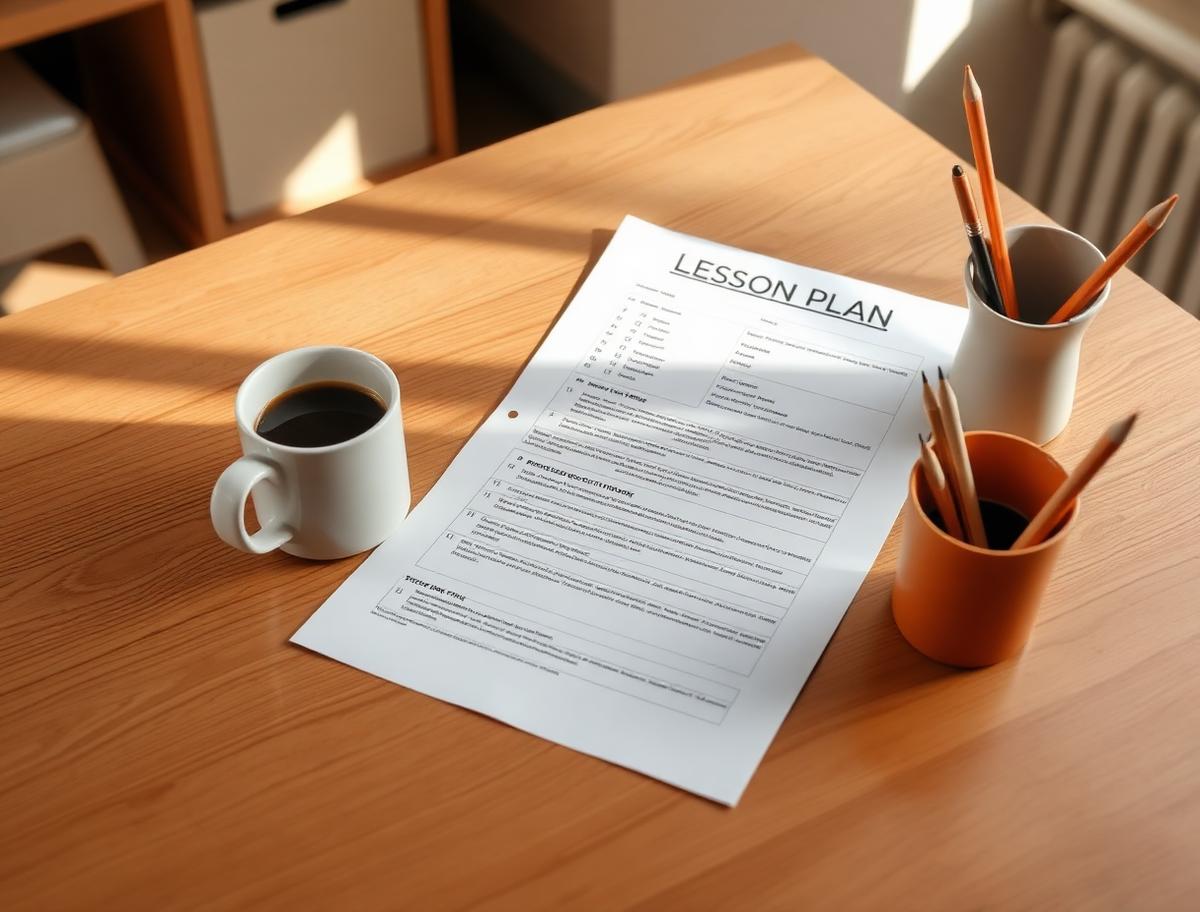 Print ready
 Team friendly
A good plan is what makes the room feel calm at 8:05 in the morning.
04
More in Planning.
- PlanningAdult / Continuing Education Course
Get an adult / continuing education course. Enter topic, audience, format.
- PlanningHomeschool Co-op Class Plan
Get a homeschool co-op class plan. Enter subject, ages, and session length.
- PlanningCourse Curriculum Builder
Get a course curriculum document. Enter topic, audience level, and duration.

Planning
Ready to plan my charlotte mason lesson?
Get a Charlotte Mason lesson & narration plan. Enter subject, age, books.