Planning
A curriculum map that actually guides the weeks ahead.
Get a course curriculum document. Enter topic, audience level, and duration.
01
How it works.
Provide topic, audience level, duration, format and get a complete course curriculum document in minutes — including learning objectives, module sequence, lesson outlines. Free AI workflow, no signup required to preview.
 Planning
Start now
Build my curriculum

02
Curriculum: outcomes, prerequisite analysis, module sequence with objectives, assessments, resources, differentiation.
Format & standard
03
What good looks like.
01
CriteriaWhat it must include
- 01Course-level measurable learning outcomes plus target-audience and prerequisite analysis — the designer knows exactly who this is for and what they will be able to do at the end, not just topics covered.
- 02Module or lesson breakdown with per-lesson objectives sequenced by backward design — content is chosen because it serves the outcomes, not because it is interesting in isolation or traditional.
- 03Time/pacing map and format decisions (video, reading, practice, project) per segment — the course has a realistic workload, not just a list of topics that explodes in actual hours.
- 04Assessments (formative and summative) aligned to the stated outcomes plus a capstone — every assessment has a clear job and the final project proves the outcomes were reached.
- 05Engagement and active-learning elements plus scaffolding — the design assumes adults or students need structure and interaction, not just content delivery and hope.
- 06Resources, materials, and explicit completion criteria — the learner knows what 'done' means and what they will need to succeed before they enroll.
- 07Plan for how feedback will be given and how the course will be iterated — the curriculum is treated as a living product, not a one-time publish.
02
QualitySignals of expertise
- ✦Uses backward design language and shows outcomes → assessment → content flow rather than a topic list — the author designs for results, not coverage that feels good in the syllabus.
- ✦Levels objectives with Bloom's or similar and aligns assessments to the same verbs — the course actually measures what it claims to teach and the verbs are consistent end to end.
- ✦Plans scaffolding and cognitive-load pacing instead of dumping everything at once — shows respect for how people actually learn complex material over time.
03
PitfallsCommon mistakes
- ×Writing a topic list with no measurable outcomes — the course drifts and learners cannot articulate what they gained or why it mattered.
- ×Content overload per lesson with no active practice — completion rates drop because the design treats learners as passive consumers of information.
- ×Assessments that do not match the objectives — the final project or test measures something different from what was promised in the outcomes.
- ×No active-learning or engagement plan — the course becomes a long video or reading list that most people never finish because there is no reason to stay engaged.
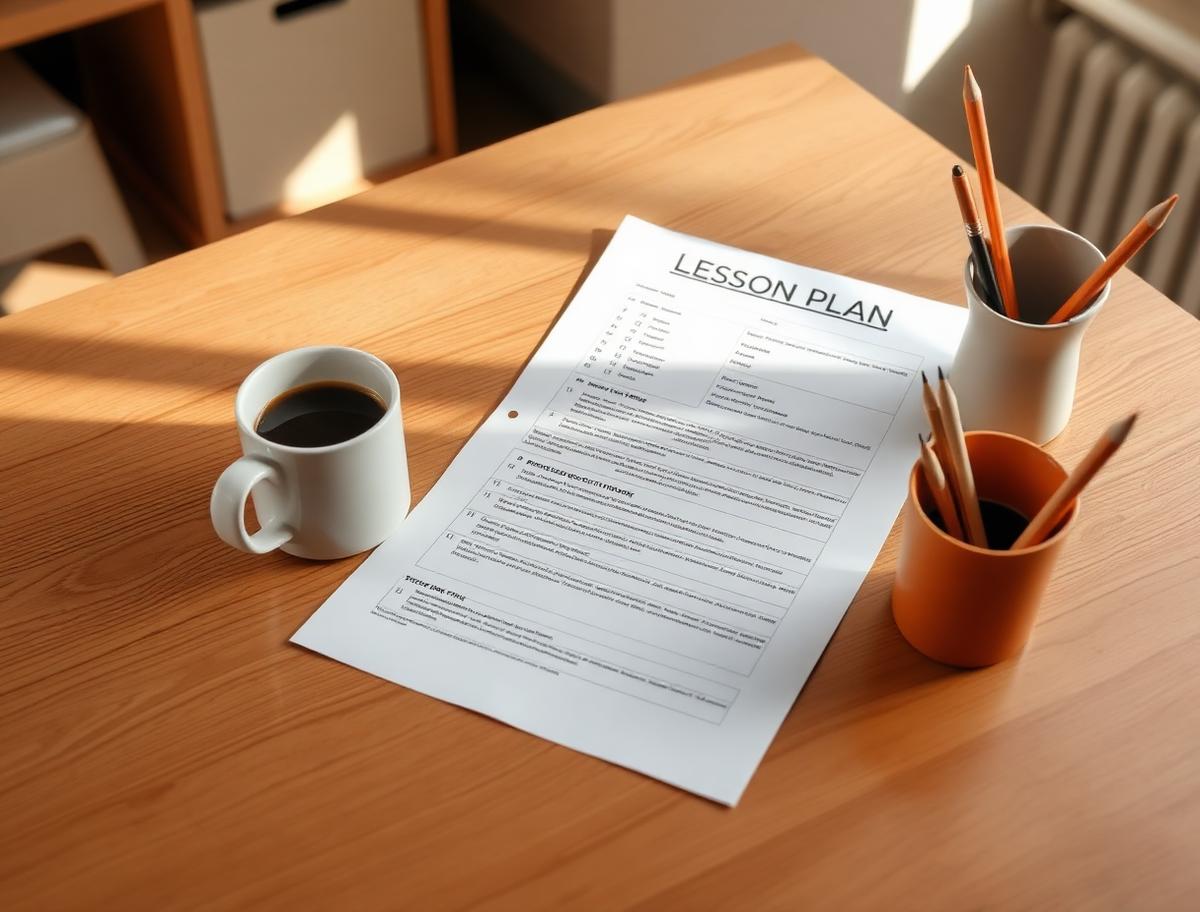
 Mapped out
 Print ready
 Team friendly
A good plan is what makes the room feel calm at 8:05 in the morning.
04
More in Planning.
- PlanningAdult / Continuing Education Course
Get an adult / continuing education course. Enter topic, audience, format.
- PlanningCharlotte Mason Lesson & Narration Plan
Get a Charlotte Mason lesson & narration plan. Enter subject, age, books.
- PlanningHomeschool Co-op Class Plan
Get a homeschool co-op class plan. Enter subject, ages, and session length.

Planning
Ready to build my curriculum?
Get a course curriculum document. Enter topic, audience level, and duration.