1. Legal Compliance Overview for [[State of Residence]]
1. File the required notice of intent or equivalent with the state or local education agency by the deadline (typically August 1 or 15 for [[State of Residence]]).
2. Maintain records of attendance for the minimum number of days or hours required by [[State of Residence]] homeschool statutes (usually 180 days or equivalent hours).
3. Cover the subjects mandated by [[State of Residence]]: reading, writing, mathematics, science, social studies, and [[additional mandated subjects such as health or art if listed]].
4. Administer or arrange the required assessment or portfolio review at year end and retain copies for [[number of years required by state]].
5. Consult current [[State of Residence]] Department of Education homeschool page and retain printed guidance dated [[current year]].
2. Year-Long Scope and Sequence by Subject
Language Arts (Reading, Writing, Grammar, Literature)
- Q1: Core phonics/review or novel studies; narrative writing focus; grammar: sentence types and punctuation.
- Q2: Informational text analysis; expository writing; grammar: parts of speech and agreement.
- Q3: Poetry and drama; persuasive writing; grammar: clauses and complex sentences.
- Q4: Research project integration; creative writing portfolio; grammar review and editing.
Mathematics
- Q1: Number sense and operations; fractions/decimals as appropriate to level.
- Q2: Geometry and measurement; data and graphing.
- Q3: Algebraic thinking or pre-algebra foundations; ratios/proportions.
- Q4: Problem-solving application; review and standardized test prep if required.
Science
- Q1: Life science — cells, plants, animals, ecosystems.
- Q2: Physical science — matter, energy, forces, simple machines.
- Q3: Earth and space — weather, rocks, solar system.
- Q4: Integrated project: scientific method applied to local environment study.
Social Studies / History
- Q1: Local community and state history.
- Q2: U.S. history to 1900 or equivalent.
- Q3: World cultures and geography.
- Q4: Civics, economics, current events project.
Additional Subjects (Art, Music, Health, Physical Education)
- Weekly art projects tied to history or science themes.
- Music: instrument practice or appreciation with composer study.
- Health: nutrition, body systems, safety, mental health basics.
- PE: daily movement, sports skills, outdoor exploration minimum 3x weekly.
3. Weekly Rhythm and Daily Schedule Template
Sample Week for [[Age or Grade Level]] (adjust for [[Learning Style]] and family rhythm)
- Monday: Language Arts 60 min, Math 45 min, Science 45 min, Read-aloud 20 min, Outdoor play 60 min.
- Tuesday: Language Arts 60 min, Math 45 min, History 45 min, Art 30 min, PE 45 min.
- Wednesday: Language Arts writing workshop 75 min, Math 45 min, Science lab 60 min, Music 30 min, Field trip or co-op.
- Thursday: Language Arts 60 min, Math 45 min, History project 45 min, Health 30 min, Independent reading 30 min.
- Friday: Review and portfolio work 45 min, Math games or application 45 min, Student-choice project 60 min, PE/outdoor 60 min, Family reflection 20 min.
Loop scheduling used for flexibility: core subjects loop every 4 days with built-in catch-up slots. Block scheduling for deeper projects on Wednesdays.
4. Resource and Curriculum Selections
Core Curriculum Picks (customize by budget and [[Learning Style]])
- Language Arts: [[Specific program e.g. All About Reading / Writing With Ease / literature-based using living books]].
- Math: [[Singapore / Beast Academy / Teaching Textbooks / RightStart]].
- Science: [[Real Science-4-Kids / Apologia / Build Your Library / library + notebooking]].
- History: [[Story of the World / The Usborne Encyclopedia / Beautiful Feet / library primary sources]].
Supplementary Materials
- [[Library card and interlibrary loan access]].
- [[Online platform subscription for one subject e.g. Khan Academy or Outschool class]].
- Manipulatives, science kit, art supplies, [[musical instrument]].
- Co-op or microschool one day per week for social and lab work: [[Co-op Name or "local homeschool co-op"]].
5. Assessment, Record-Keeping, and Portfolio Plan
1. Maintain a simple daily log: date, subjects covered, hours, brief note or photo of work.
2. Use a three-ring or digital portfolio with sections for each subject; include dated samples, photos of projects, and student reflections.
3. Quarterly check-ins: child self-assessment using simple rubric; parent review of mastery; adjust pacing for weak areas.
4. End-of-year: compile portfolio or take required standardized test per [[State of Residence]] rules. Keep copies for [[years]].
5. Track reading log: minimum [[number]] books or pages per month across genres.
6. Field Trips, Co-ops, and Socialization
- Monthly field trip aligned to current unit (museum, farm, historical site, nature center).
- Weekly co-op or park day for group activities and peer interaction.
- Sports team, music lesson, or volunteer role for ongoing social and skill development.
- Quarterly service project or community event.
7. Goals and Review Checkpoints
Child Goals (SMART, reviewed quarterly)
- Read [[target number]] chapter books independently.
- Master [[specific math facts or concepts]] by end of Q2.
- Complete one multi-week research project with presentation to family or co-op.
- Develop consistent daily writing habit (journal or assigned pieces).
Parent Goals
- Maintain consistent rhythm while allowing flexibility for child interests.
- Document compliance thoroughly.
- Schedule monthly parent learning (podcast, book, or local group) on homeschool methods.
Review Checkpoints
- End of September: settle-in adjustment.
- End of December: mid-year review and possible course correction.
- End of March: final push planning and testing prep if applicable.
- End of May/June: year-end portfolio and celebration.
8. Budget and Supply Planning
- Curriculum and materials: [[estimated $ amount]].
- Co-op and classes: [[estimated $ amount]].
- Field trips and experiences: [[estimated $ amount]].
- Total projected annual: [[total]] (adjust with used curriculum groups and library).
9. Contingency and Flexibility Notes
1. Build in 4-6 weeks of lighter load for travel, illness, or deep-dive projects.
2. Have backup online or workbook options ready for any subject if primary resource does not fit.
3. Re-evaluate state requirements annually; laws can change.
4. Prioritize child well-being and love of learning over rigid completion.
This plan provides a complete, compliant, and adaptable framework for [[Child's Full Name]]'s [[2026-2027]] homeschool year in [[State of Residence]]. All variable inputs are captured as [[merge fields]]. Replace placeholders with actual details and update resources to match your family's chosen materials and [[Learning Style]]. Review and revise the scope monthly based on the child's progress and interests.
Year-at-a-Glance Calendar Notes:
________________________________________________________________________________
________________________________________________________________________________
Monthly Reflection Template (copy 9x):
Date: ________
Wins this month: ______________________________
Adjustments for next month: ______________________________
 Planning
 Mapped out
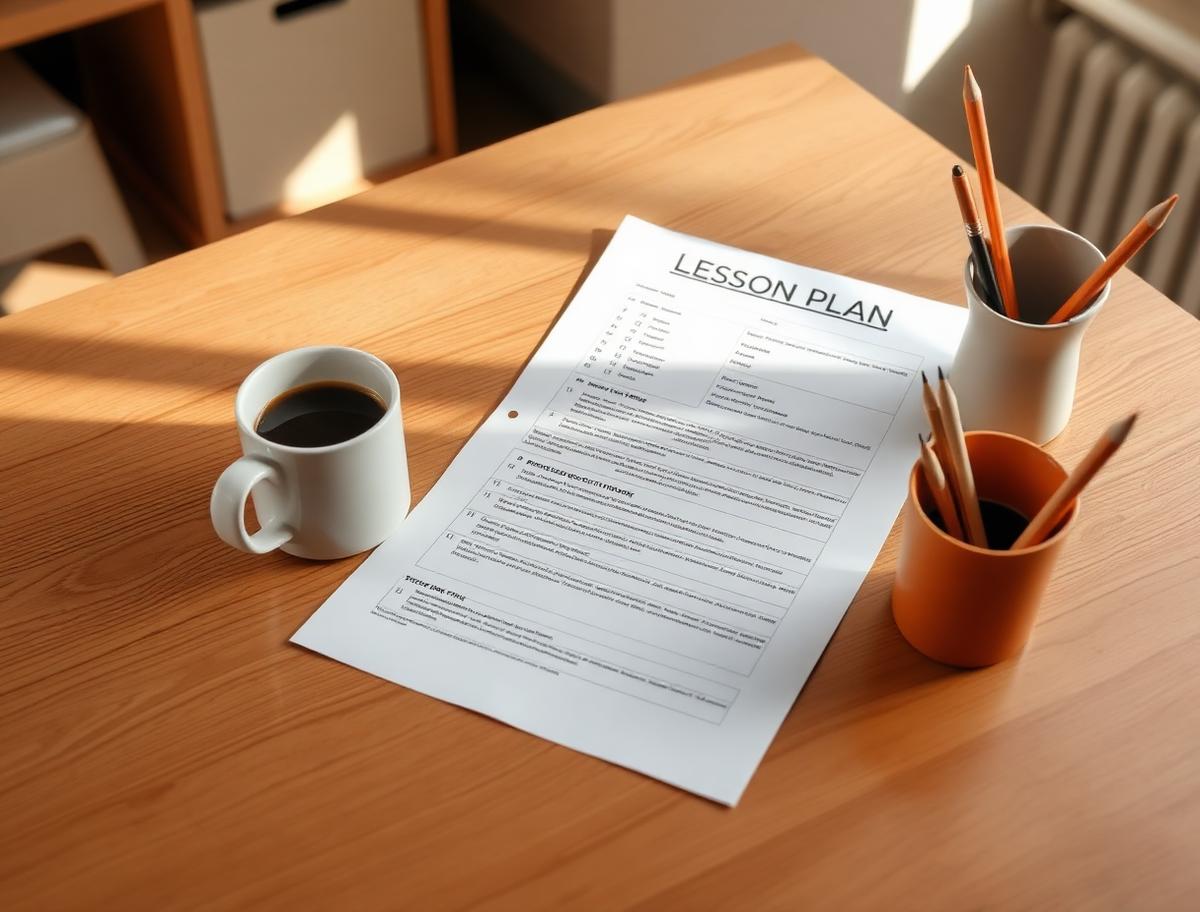 Print ready
 Team friendly